

WHAT HEARING LOSS FROM TOO MUCH NOISE SOUNDS LIKE
A demonstration of what hearing loss from too much noise sounds like, either as a video or as single clickable links.
This shows how hearing is lost over time.
It is worth highlighting that older men often have a similar pattern of loss, losing hearing in the higher frequencies first, hence often struggling to hear someone speak in an area with a lot of background noise. The concern is when that natural loss is then added to by more losses from too much noise.
The point of a noise assessment is to identify risks to hearing and see what can be done about it. When hearing is damaged by excess noise it is not simply a case of things getting quieter but that they get more muffled and indistinct first. This demonstration of what noise induced hearing loss sounds like uses a piece of music and then apples successive filters to mimic progressing hearing damage caused by excess noise.
Industrial Deafness vs Noise Induced Hearing Loss (NIHL)
Noise Induced Hearing Loss by the way is what used to be called Industrial Deafness. The change in name is because all excess noise does the same damage, whether it is loud music, gigs, DIY tools, motorbikes and so on, as well as workplace noise. The term ‘industrial deafness’ implied a cause which is often not actually the case.
Noise Induced Hearing Loss Demonstration video
This video walks you though varying levels of hearing loss, starting out with normal hearing and then progressing through a few levels of deterioration.
It applies filters to the same piece of music to mimic the varying levels of hearing loss, showing how speech goes from something separate to background noise through to eventually becoming all bundled into one mushy mass of noise where someone talking gets buried by all the other noise around them.
To get the best impact from it, use headphones or some speakers so you can start off quite loud as the volumes quickly drop.
As I am such a lovely accommodating chap and recognise that not everyone wants to site through ten minutes of my waffle, this is the summarised version of it all with clickable links for the audio demonstrations.
What loud noise does to hearing
Loud noises kill part of your hearing but it is not the case that everything gets a bit quieter, at least not initially. Your ears are more sensitive to certain sounds than others, with the human ear being very much matched to the key sounds in speech, meaning we hear speech over and above other sounds. This means that when there is a lot of background noise around people with normal hearing hear speech louder and more keenly than everything else, meaning we easily pick speech out over all the other noise.
We don’t notice it but the effect is almost like listening to two noises at once, speech and then everything else.
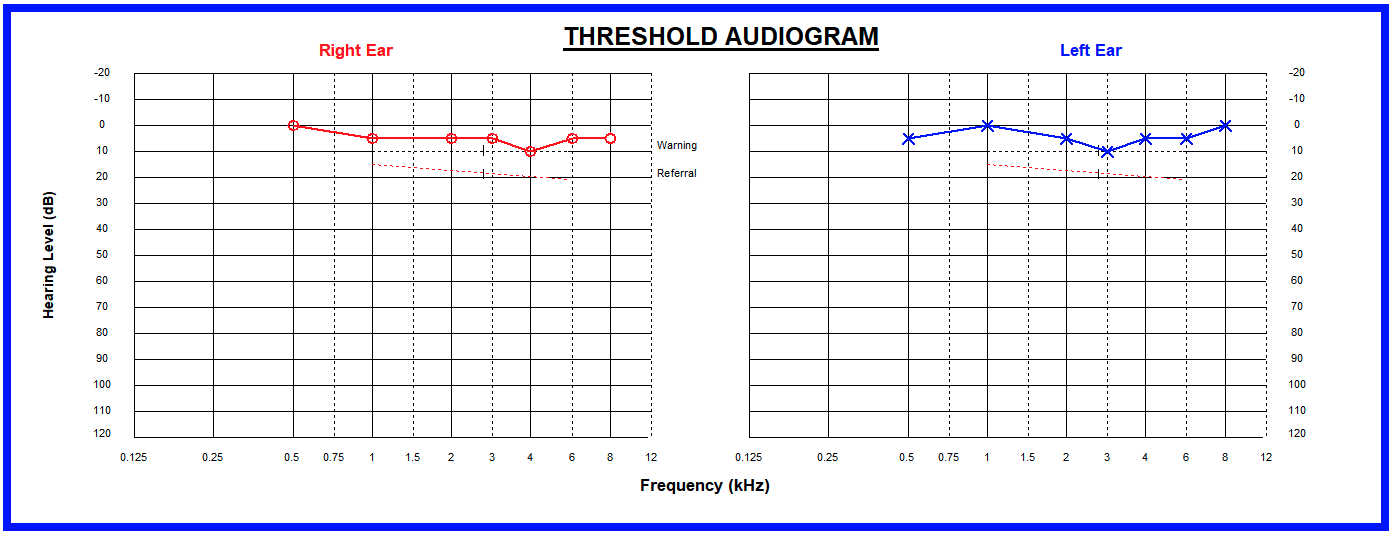
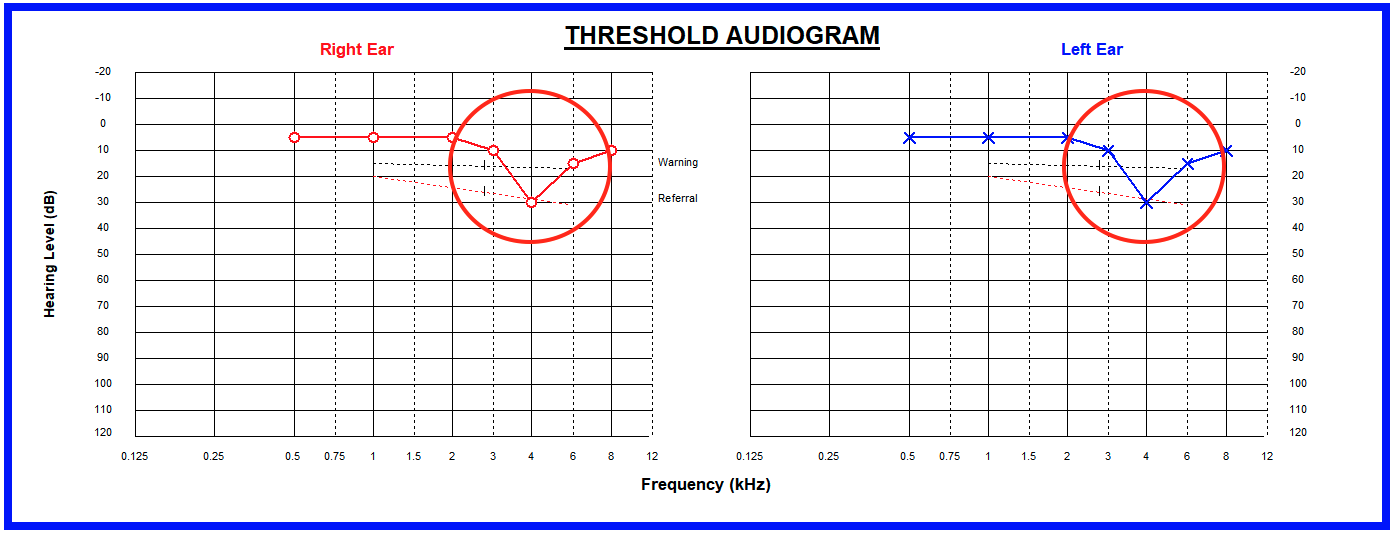
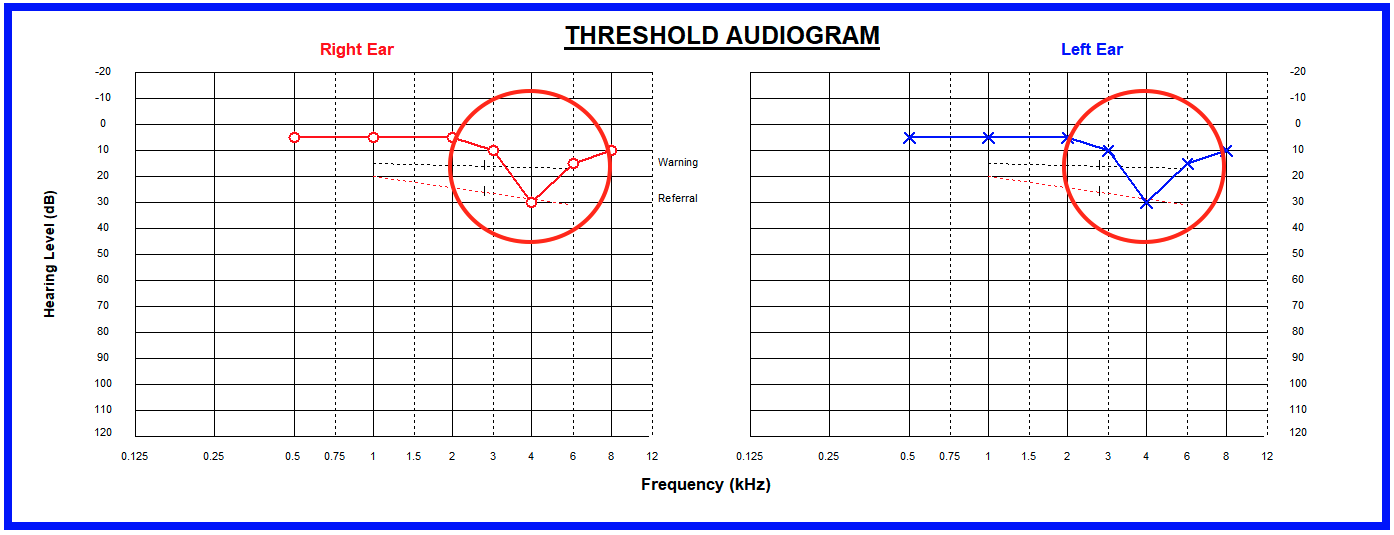
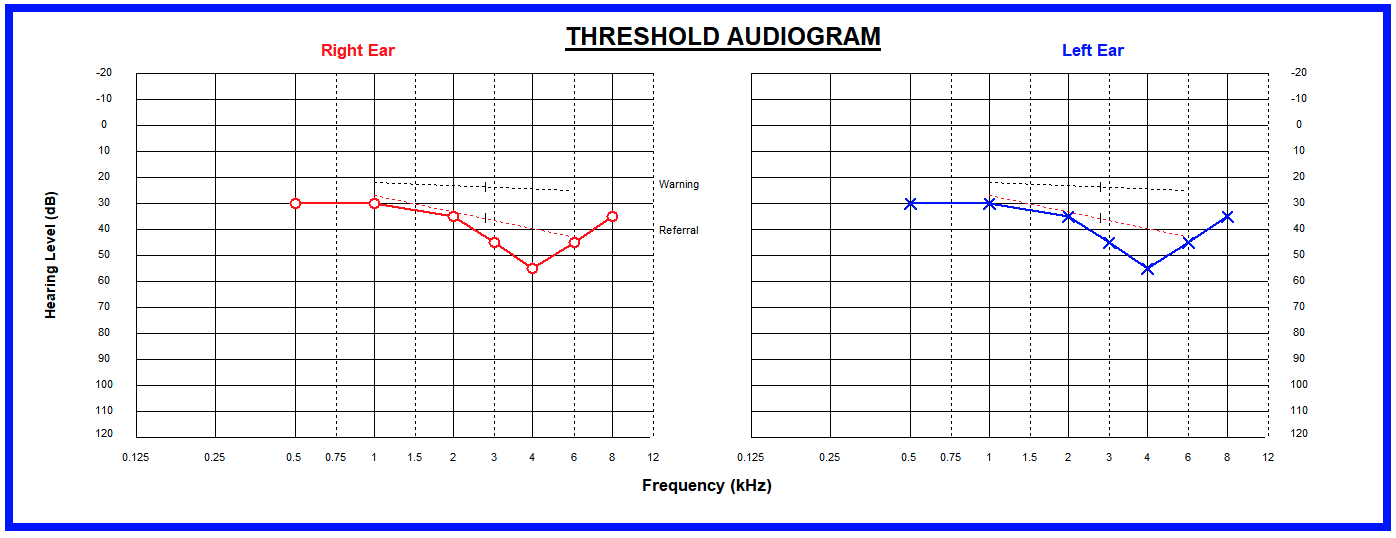
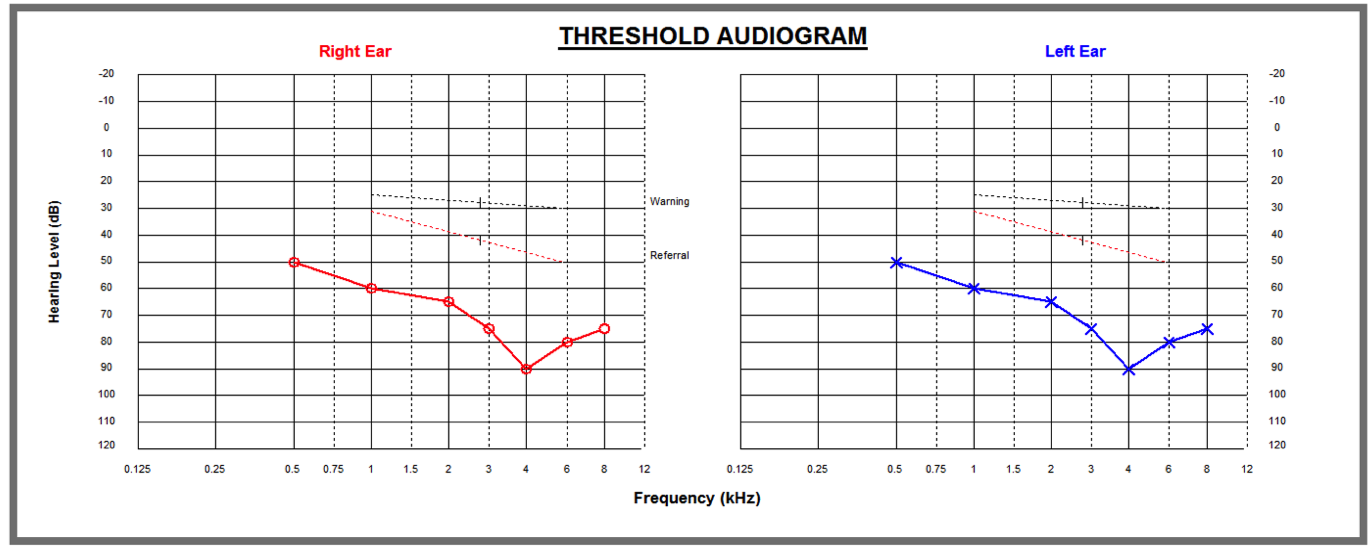
In a hearing test, this is what the graph of the result looks like.
The graphs go from a low bass on the left to high pitched noises on the right, and the closer to the top of the chart the better the hearing is.
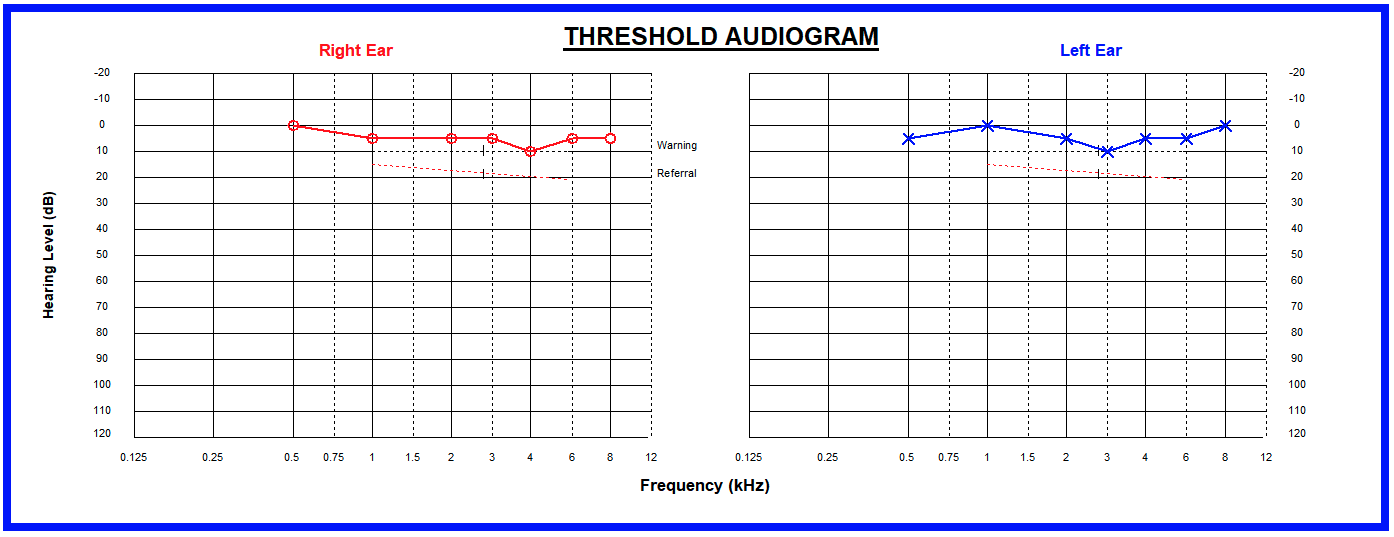
In normal hearing, someone is reasonably flat with a pretty even response across the entire range as in the top graph.
The problem is, excess noise damages hearing, and as we are more sensitive to speech, then it is specifically the ability hear speech which is damaged first. That means everything doesn’t get quieter, but things get less crisp, less clear, and sounds get muddied with speech starting to get buried into other noises. In the hearing test graph you start to see a dip at the higher frequencies showing only some areas are getting quieter, not all.
The classic example of someone with noise damage in their hearing is the person sat in a pub who can hear what is going on over on the other side of the room but can’t hear what someone is saying who is right next to them.
This is a little simplified and current research also highlights damage in the nerves transmitting noise from the ear to the brain which takes out the ability to hear loud sounds.
The music and what you are listening for
I use this bit of music as a demonstration as it has two really useful parts. The first 20 seconds or so is mostly just the vocals, so equivalent to listening to someone speaking when there is no other background noise around. Then the band kick in and that is more equivalent to listening to someone speaking in places like a busy pub or restaurant, or listening to speech on a TV with loads of background music also playing.
The song by the way is Drunken Serenade by Merry Hell and thank you to them for letting me play around with it.
Normal hearing
This is just the music as it is with no filters. You can hear the vocals nice and clearly, and when the band start up the vocal stay well separated from the music and it is still easy to pick up on what is being said.
Slight noise damage
Some slight noise-related damage has started to impact the hearing and the upper frequencies have started to drop a little. The music is still fine, just not quite got the sharpness or crispness it did originally.
Heavier levels of noise damage
The noise damage has progressed and it is starting to have a larger impact. You can still hear the vocals both on their own and with the music but the separation of the vocals and the music is starting to get a bit lost, it is becoming one mushy sound just with the vocals layered on top.
As well as being less clear, the music also sounds quieter as all the frequencies have been reduced, although still significantly more so at the frequencies most impacted by noise.
Heavy levels of noise damage
Here, the vocals on their own are OK, if very quiet, but when the background noise kicks in then it really swamps the speech. With this, you have to really listen to it to get the words which is the same as someone sitting in the pub who is guessing what is being said using context or even a bit of lip reading.
With this one, all the frequencies have started to be damaged, hence it is quieter, but it is also a lot more bass-heavy and ‘muddier’.
For someone with this level of noise damage in their hearing it will impact all areas of their daily life.
When someone has hearing like this it really does impact every area of their lives. TV drama companies love to put background music behind speech but for someone with this hearing all it means is the speech gets buried into the background noise.
As they can’t follow what’s being said they could turn the TV up, and they usually do, but all that does is make a muddy noise into a louder muddy noise, it doesn’t add clarity or intelligibility back to them.
Often they start to socially isolate a bit. There is no point going to a pub or restaurant if all you can hear is the rumble of everything going on around you but not hear what anyone is saying. You end up sitting a nodding a grinning but not really catching much of what is going on.