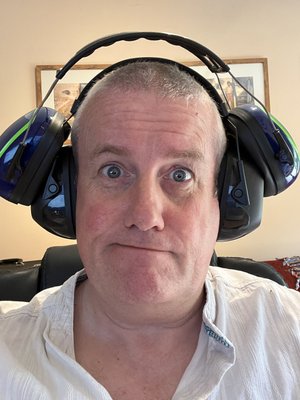

Hearing aid users and hearing protection in high noise areas
Can a hearing aid user have an exemption from using hearing protection, or wear it under their ear muffs?
Key points: Hearing aid users working in a high noise area
There is no medical exemption in the Control of Noise at Work Regulations 2005 from the need to wear hearing protection. The HSE’s L108 Controlling Noise at Work (Third Edition) makes it very clear that using a hearing aid does not mean someone can be omitted from the hearing protection requirement.
Even though someone has a hearing aid or is ‘deaf’, noise can still make their hearing worse.
Someone with a hearing aid can be considered at greater risk. A small further reduction in their hearing could have a dramatic impact on their life. It can be more important they wear hearing protection than other people, not less.
Hearing protection is still needed if they have to work in a high noise area.
Hearing protection can be over the hearing aid, but if that doesn’t work then the hearing aid needs to come out and hearing protection go on. The noise risk assessment then needs to ensure that doesn’t introduce more risks.
One exception could be if medical confirmation is given that loud noise cannot make their hearing any worse.
One of the fairly common issues in a noise assessment concerns people who wear hearing aids but they also work in a high noise area so fall into the requirements for hearing protection to be worn.
There is a video for those who prefer it, or all the text below explains the issues for people who prefer reading.
A review of the ways to deal with people who wear hearing aids and who also have a need for hearing protection at work.
What the HSE say about this?
To establish the starting point for the issues around it, there is no exemption from the requirement to wear hearing protection for people who have hearing aids. This is what the HSE say about it in L108, the document outlining their rules for noise safety at work:
Extract from L108 on the use of hearing protection for people with medical issues
The key part there is that “a medical condition does not exempt a worker from wearing hearing protection where the risk assessment has shown that hearing protection is required”. That applies equally to hearing loss (so hearing aid users), infections, feelings of irritation in the ears, etc.
There is some good sense behind this and it comes down to the fact that already-poor hearing does not make them invulnerable to further damage from noise. Indeed, the duty of care to ensure someone is wearing hearing protection who also has hearing aids is arguably higher than it is for someone with normal hearing.
If a person with good hearing loses 20dB of high frequency hearing from noise damage for example, then chances are the impact on their life will likely be negligible, they probably wouldn’t even notice it in most cases. If someone with already-poor hearing loses another 20dB due to excess noise though it could be the difference between being able to hear some speech in normal conversations and not being able to hear speech at all, a far more significant deterioration and impact.
If there is a noise risk then the baseline is that hearing protection still has to be worn. The HSE say there is no exemption for hearing aid users, and the potential impact of more hearing loss can be worse for people with hearing aids than for those without them.
What kinds of people need hearing aids?
Hearing aids are increasingly common as more people get access to them, and as they become smaller and more discrete more people are happy to wear them, but hearing is not a binary ‘deaf / not deaf’ issue and just because someone has a hearing aid does not mean they are ‘deaf’. This is important as it means noise can still damage their hearing for most people.
Hearing aids do not mean someone is ‘deaf’
The vast majority of hearing aid users still have some hearing, and in a lot of cases can still have quite decent hearing, just not quite as good as it should be and that means most people with hearing aids can still have their hearing made worse by excess noise exposure.
As a very rough guide to how hearing works, when you lose hearing via age, most of the time it is not a case of everything getting quieter - it’s not like wearing an ear plug and reducing the volume of everything. For a lot of people it starts as the part of the ear which senses sharp sounds which goes first and that has quite an impact as this is where a lot of the clarity in speech is. It is still there, just not as sensitive as it was, and everything now sounds rather muddy and indistinct, a big mush of noise.
The key risk is that too much noise also damages those same parts of the ear which make things sharp and clear. That means that even though someone is already weak in this region and has a hearing aid for it they can still have their hearing made even worse by too much noise.
Over-selling of hearing aids
A sub-issue to this is that quite a lot of people with hearing aids don’t absolutely need them - they are for comfort and convenience rather than a necessity.
Up to October 2024 I also did hearing tests at work and had a team of staff who did them. We covered around 300 workplace hearing tests a week on average and I’d done that for 20 years, that’s a lot of ears and over 1/4 million hearing tests overseen.
Without fail, every couple of weeks in the more recent years we would get someone who came in for a hearing test wearing hearing aids who pronounced themselves ‘deaf’ before we’d even started. They would then take the hearing aids out and proceed to have an entirely normal conversation with us - warning sign number one that they may not be as deaf as they thought they were. We would then stick them in the booth and do a hearing test and they came out as absolutely fine for their age. Almost inevitably they were a 40 or 50 year old with the normal hearing of a 40 or 50 year old.
When you questioned them the story was always the same. They were concerned about their hearing (usually finding it hard to hear speech when there is other background noise around, which is common as you get older and those sharper sounds deteriorate) so went to get a hearing test on their local high street. The person there dutifully showed them a graph of their result and showed them how much worse their hearing is now compared to how it would have been when they were younger and proceeded to tell them how a hearing aid would make it better. Which technically it would, but as it would for about two thirds of the entire population.
So they went to a high street shop, paid £25 or whatever for a hearing test, and ended up being recommended to spend anything from £2,000 to £4,000 on hearing aids which the shop helpfully also sold to them. No conflict of interest at all there then…
What to do about people with hearing aids in high noise areas
Looking at each of the options in turn.
Route 1: Use of hearing aids as hearing protection
Hearing aids do not block out noise to a level which is certified as hearing protection - i.e. to EN352.
That is important as it means if a person wears hearing aids in a loud environment of say 90 dB(A) without hearing protection, the hearing aids don’t block that out and they still get a noise level of 90 dB(A) reaching their ears.
If there is a noise risk then the employer has a legal obligation to provide hearing protection and ensure it is used, and that means protection certified to EN352 and with an assigned SNR number, etc. Hearing aids do not have this so are not hearing protection, so cannot be used as protectors in a high noise area.
Using the hearing aid as protection is therefore not an option.
Route 2: Hearing aids worn under hearing protection
This is a possible route for controlling the risk and is the preferable one.
If the hearing aid is small enough that it can be worn under a hearing protector then there is no reason why that can’t be permitted and most hearing aid wearers do fall into this.
The risk to people from excess noise is the noise coming from the workplace, not the hearing aid, especially as most are volume-limited or tuned to that person’s hearing. If the hearing protection blocks out the dangerous element of the workplace noise then the hearing aid will not add it back in.
What I mean by way of an example: If a factory is at 90 dB(A) and the ear muff knocks that down to 65 dB(A), that is roughly the same as an office. If the hearing aid is under the muff, as far as the hearing aid is concerned the noise level it is working in is the same as an office, so it should just adjust the noise levels for the wearer exactly the same as it would in an office or at home or anywhere. The fact it is under an ear muff doesn’t mean the hearing aid will increase the noise levels back to the same as it is in the factory outside the muff.
This is the ideal approach.
Route 3: Hearing aids out, hearing protection on
If the design of the hearing aid is such that it cannot be worn under the ear muff or stops the muff getting a good fit and seal, then Route 2 is not an option and that means the hearing aid has to come out and the hearing protection has to be worn. It goes back to the HSE’s stance of no medical exemptions from hearing protection if there is a noise risk.
If someone can barely hear anything then so be it, but this still doesn’t negate the need to protect them from the high noise and the potentially severe impact of further hearing loss. That potential loss is possibly life-changing and permanent so cannot be set aside in favour of just permitting hearing protection not to be worn.
In cases like this, you need to look at your risk assessment(s) for that job or person. Can they still hear things like fire alarms or do you need visual warnings or a something like a buddy system. Can they still hear moving vehicles in their work area if there are any, and if not do you need to provide a barrier or locate them somewhere away from the vehicles, etc.
Route 4: Not wearing either hearing aids or hearing protection
This again is not an option. It goes back to the HSE’s stance of no medical exemptions and that the vast majority of people with hearing aids can still have their hearing made worse by excess noise therefore simply not wearing either a hearing aid or hearing protection is not a permissible option.
A possible exception to this
The one exception to this is the small percentage of hearing aid users who have hearing which cannot be made worse by noise. These are usually people who cannot hear a thing when the hearing aids are taken out, total silence. Basically their ears are just there to keep glasses straight.
If someone has hearing which falls into this, then if they provide a written confirmation of the fact noise cannot make their hearing worse from a doctor, G.P. or audiologist, then it is OK for them not to wear hearing protection as this medically confirms the protection does nothing at all for them. It would be like making someone with a titanium foot wear boots with steel toe protection, pointless.
But employers must have that in writing, you need proof that noise cannot impact someone’s hearing and their word on it is not enough. A lot of people dislike wearing hearing protection and over the years of this job I’ve heard a hundred times ‘I have bad hearing so I don’t need to wear hearing protection’ from people who really don’t have a clue what their hearing level actually is, they just don’t like wearing PPE.
I should flag that an employer should be prepared to justify this on any HSE visit as their stance is ‘no medical exemptions’, so be sure to have that confirmation in place, but this would appear to be a common sense approach to very specific, and unique, circumstances.
Noise-cancelling headphones as hearing protection
This is not a solution which can be used. Normal noise-cancelling headphones are not hearing protection so fail to meet the need for certified hearing protection to be used.
Even if someone uses in-ear buds to help with clarity in normal life, that doesn’t mean they are any different to the hearing aid issue so cannot be used in place of hearing protection.
What about someone who says no type of hearing protection is good and none of the options above will be followed?
You could have a situation where someone has a hearing aid and cannot or will not provide any kind of medical confirmation that their hearing cannot be made worse by noise, but they also refuse to either put an ear muff over it or to remove the hearing aid in the high noise workplace and wear hearing protection.
In this instance the employer is then effectively in the same situation as they would be for any other employee who refuses to wear hearing protection in a high noise area.
That means relocate them to a job which is outside of any noise risk (as per the HSE extract at the top of the page), or if there is no such possibility then employment has to be terminated.
An employer cannot knowingly allow someone to work knowing they are at risk which they would be in high noise with no hearing protection, whatever the reason for not wearing it, and if there is no other quieter job available then that employment cannot continue.
It goes back to the HSE’s statement above - medical conditions do not exempt someone from a need to wear hearing protection.
A style of ear muff worth trying out
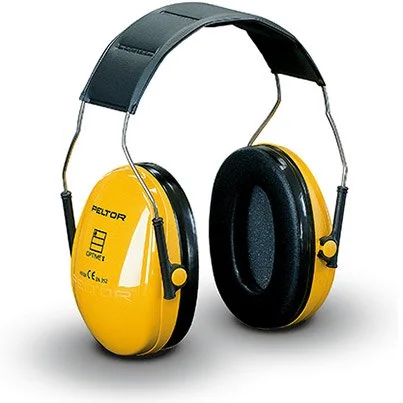
What an employer should do is try a few styles of ear muff and see which a hearing aid wearer gets on best with, but both the employer and employee have to acknowledge that something has to be worn and just saying no to everything to carry on not wearing protection is not a solution. Sooner or later either a style has to be chosen or the ‘hearing aid out, hearing protection on’ route chosen.
Honeywell’s Verishield range of ear muffs have a particularly deep cup so are often worth trying for hearing aid users. They have a wide range of SNRs so can over most workplaces. The VS110 is a good SNR, has a deep cup and quite a soft cushion and I’ve seen it used favourably by a few hearing aid wearers.
FAQ: Use of hearing protection by people with hearing aids
Can I just turn the hearing aid off and not wear hearing protection?
No, this is not permitted. If there is an identified risk which requires hearing protection then the protection must be used.
If I take the hearing aid out and put hearing protection on I can’t hear anything at all?
While this must be horrendous to have to deal with, the HSE’s stance is clear - there are no exemptions from the need to wear hearing protection.
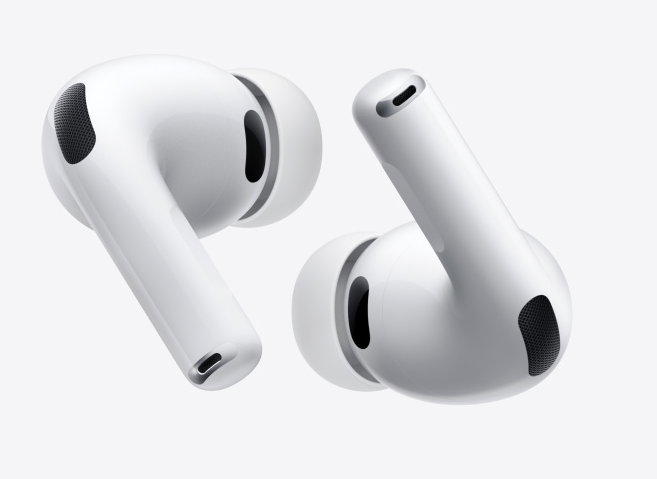
I use my in-ear buds such as AirPods in their hearing aid function, can I still use these under an ear muff?
No, Apple may market AirPods as having a hearing aid function but that doesn’t make them hearing aids.
Can someone who has no hearing at all still have a risk of tinnitus from noise exposures?
We are talking about someone with no hearing at all, silence here.
If someone has a complete and total loss of hearing because the cochlea is badly damaged then excess noise probably won't do anything as the cochlea won't be sensing the noise, so noise won't damage it. That would also cover noise-caused tinnitus.
In other cases where someone has a complete loss of hearing it can be because the nerves conducting the signal from cochlea to brain are damaged. Here, the cochlea can be working perfectly and sends the 'I've heard something' signal, but that signal is never received by the brain. In these cases, excess noise would cause damage to the cochlea as that is working just the same as anyone else’s, and that could include the type of damage which would lead to tinnitus in someone with good hearing, but in the totally deaf the signal from from the cochlea doesn't go anywhere. The cochlea is sending that signal off into the void and as far as the brain is concerned the cochlea may as well not be there as it is completely disconnected, so noise damage to the cochlea has no impact on the brain, either in the form of hearing loss or tinnitus.
Some forms of tinnitus are the brain creating the noise when it is trying to be helpful. The brain can expect a certain type of signal from the cochlea and when that signal isn't received the brain basically goes 'well it should be there, so I'll just pretend that it is', but it usually overdoes it and we hear tinnitus as a result. A totally 100% deaf person could have that kind of tinnitus as their brain constantly tries to deal with a missing input, but excess noise isn't going to impact it.
More information on hearing protection at work







Article last reviewed May 2026