

Advice on managing noise risks at work
A series of blog articles giving advice on managing noise risks in UK workplaces for compliance with the UK’s Control of Noise at Work Regulations 2005, from an experienced occupational noise assessor.
Managing noise risks at work, all about noise assessments, selecting hearing protection and issues experienced with hearing protection, training and legislative needs, health surveillance issues and how to practically manage it..
Noise assessments ● Noise surveys ● Hearing protection ● Health surveillance ● Noise Training
For a specific subject area, try the search box
Short subject-specific advice on various aspects of managing noise safety at work.
All advice and articles are written by me, The Noise Chap, a specialist noise assessor with over 30 years of experience in workplace noise assessment, including 20+ years now as a noise assessment consultant working in all industries across the UK.
I hold certification of competence in workplace noise assessment from the Institute of Acoustics, the NEBOSH Diploma and am certified in workplace hearing testing and a member of the British Society of Audiology.
The articles cover the noise assessment process itself and how to manage various aspects of managing workplace noise risks, including health surveillance and hearing protection, delving into very specific questions such as hearing protection for workers with pre-existing hearing losses, and including practical advice and examples to help employers comply with the Control of Noise At Work Regulations 2005.
All content is based on UK law and on the HSE’s L108, Controlling Noise at Work (Third Edition).

What do the hearing test result categories mean?
Part of a noise assessment is to identify who needs to be included in a hearing testing programme, and the HSE specify the result categories to be used. This is what the categories are and what they mean.
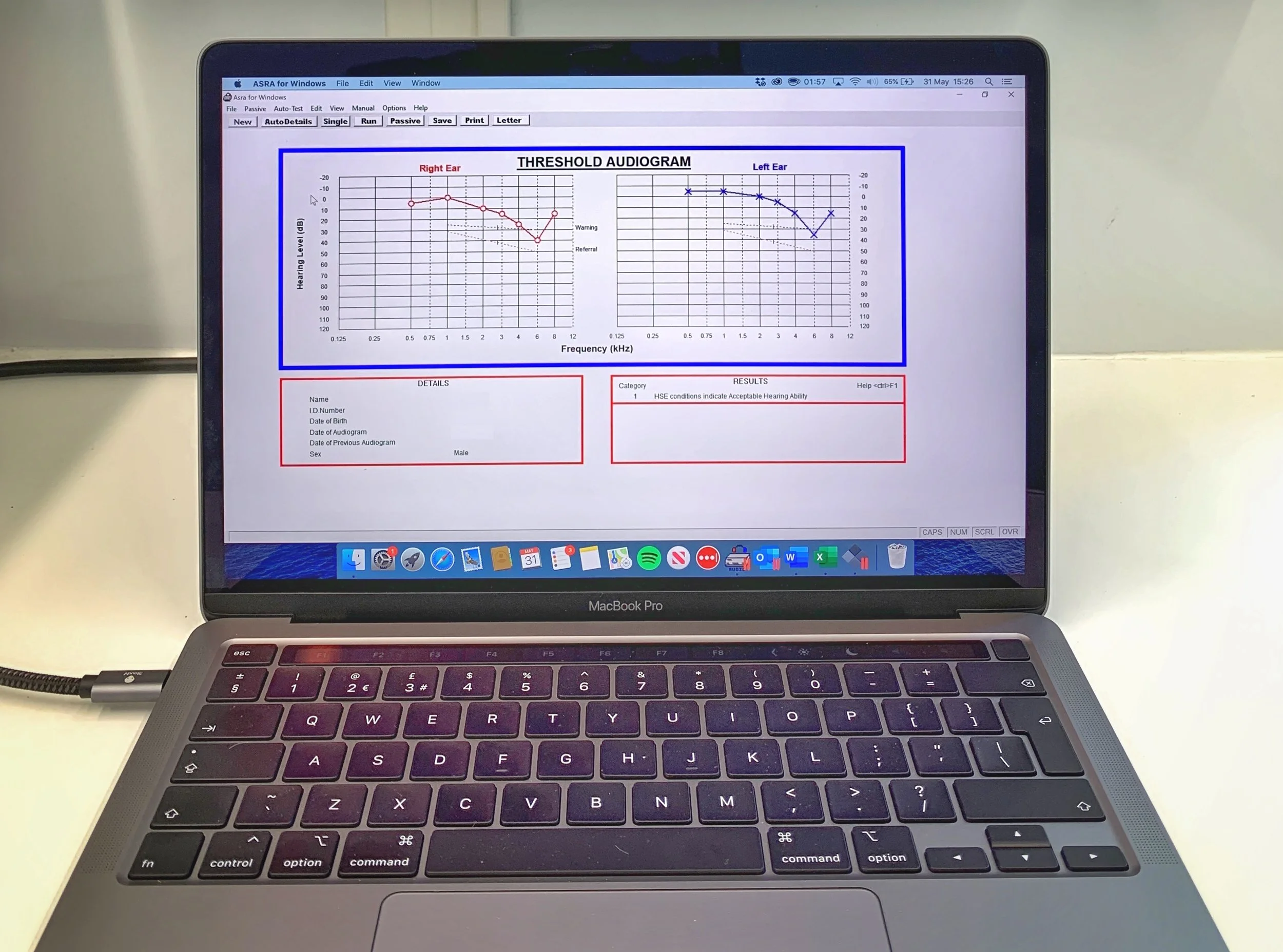
Who should be included in hearing testing at work
The UK’s Noise Regs require anyone who is regularly exposed at work to a daily noise level of 85 dB(A) or above, or who meets the 137 dB(C) peak limit or above, to be included in a hearing health surveillance programme, or as it often more colloquially called, hearing testing. Getting the right people involved is important.

How often does hearing testing have to be done?
One of the key elements of a noise assessment is identifying who needs to be included in what the HSE call ‘health surveillance’, a slightly Orwellian way of saying ‘hearing testing’. It has to be repeated and this is a guide to how often.
Why workplace hearing testing (health surveillance for hearing) is broken
Why the UK’s hearing health surveillance system as required by the HSE in L108 is no longer fit for purpose, and why I stopped providing workplace hearing tests.

Responsibility for hearing testing in Agency staff
One of the main outcomes from a noise assessment is often a need for health surveillance - hearing testing - and that applies to everyone regularly exposed to levels over 85 dB(A). Where it can get a little more complicated is agency staff, especially who is responsible for the hearing tests.