
How often does hearing testing have to be done?
Key points: How often hearing health surveillance is needed at work
The first test is called the ‘baseline’. Whenever this is done is Year 1.
A second hearing test is due one year later.
Subsequent hearing tests are done on a frequency which depends on the results, up to a maximum of three years.
If hearing tests become older than three years then effectively they expire and if nothing has been done more recently you are back at Year 1, with another set then due a year later.
The retesting frequency is as determined by the occupational health professional undertaking the tests. A company cannot just say they test everyone every two or three years, that is not considered compliant with health surveillance.
One of the key elements of a noise assessment is identifying who needs to be included in what the HSE call ‘health surveillance’, a slightly Orwellian way of saying ‘hearing testing’. The noise assessment should identify everyone who is routinely exposed to a noise level over 85 dB(A) and these are the people who need hearing tests.
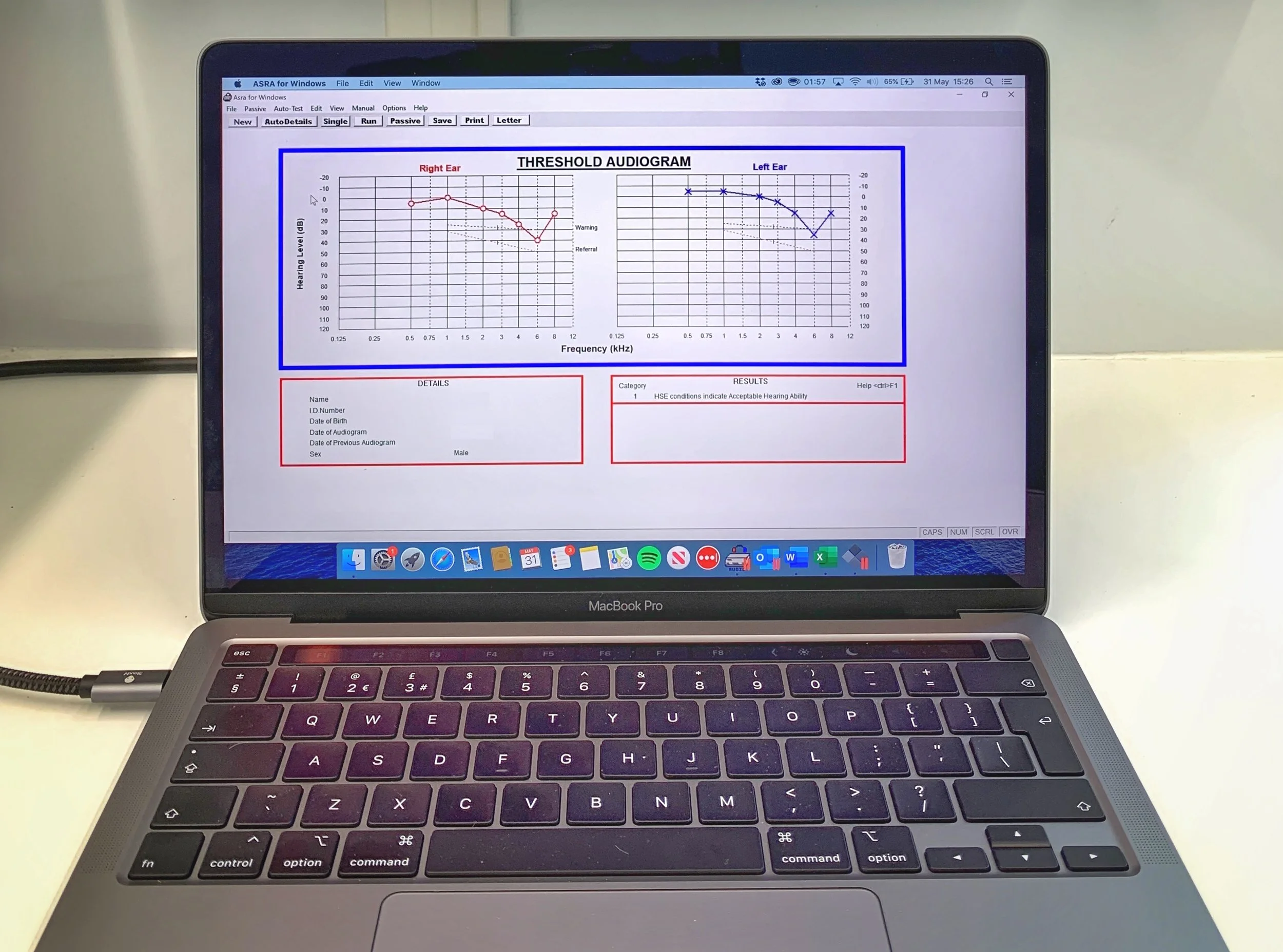
Health surveillance is not a one-off thing and to meet the health surveillance regulatory needs it must be an ongoing process. The HSE outline parts of it in the Noise Regs. - ‘audiometric testing’ means the actual hearing testing element of health surveillance.

Extract from L108 Controlling Noise at Work
To be clear, that comment about ‘three yearly intervals’ is not the end of it and that comment about ‘more frequent testing may be required’ is important. You cannot simply test everyone every three years to be compliant with the health surveillance needs, nor every two years for that matter.
A plainer guide to the retesting frequencies is:
A person gets their first test, either when the hearing testing programme starts or whenever the first session is after they start work.
The second test is then one year later. That is very clear in the HSE’s requirements above.
The first test establishes how good their hearing is against normal standards for their age and sex, and then the second test confirms rate of change by comparing the two. Subsequent tests are then based on the result of that second test.
If the second or subsequent test is Category 1 then they are next due in three years.
If the second or subsequent test is Category 2 they are next due in two years.
If the second or subsequent test is Category 3 or 4 they are next due in one year.
Retesting can be more frequent than this.
If the medical professional overseeing the hearing testing recommends it then another hearing test could be required after six months (for example) for someone with a problem. E.g. if someone has a significant deterioration between two tests then the medical person may recommend a more frequent test to determine if the hearing has stabilised or improved again, or is still getting worse.
If this more frequent testing is recommended by the medical professional overseeing the hearing testing programme for the employer then that is the retesting requirement the HSE expect to see and it overrules any of the one, two or three year overall procedures.
‘Test everyone every two years’ retesting routines are not compliant
A lot of companies do take this approach - they just test everyone every two or three years, often not just for hearing but also spirometry as well if they have inhalation risks. I understand why as it keeps the management of it much simpler but this is not compliant with the health surveillance needs of the Noise Regs and some HSE inspectors will take enforcement action if they see this.
In 2024 I spoke to two HSE inspectors who specialised in Occupational Health and both had active enforcement action ongoing against employers who were just using the ‘retest everyone every two or three years’ approach.
What about hearing testing for new starters?
An element of common sense is needed here. Technically, they should be tested as they start but that could quickly make a complete mess as people then have retest dates scattered all through the year rather than in batches. For an employer that becomes a nightmare to manage, and for smaller employers without in-house testing staff, exceedingly expensive.
For my own recommendation, provided you have a noise assessment in place, the hearing protection has been assessed as suitable for the noise risk and you have systems in place to ensure it is being worn, then the new starter is not actually experiencing any high noise exposures. You are not going to make them deaf in a few months. Personally I would roll them into whenever the next batch is planned, but it is important to make sure they are included and are not off work when it takes place.
To be clear, this is what I think is sensible, not what is said in L108.
If you have a lot of new starters then maybe plan an interim testing day between the main batches as it becomes more cost-effective as numbers increase.
What about non-attendees or missed people?
No matter how carefully you plan a hearing testing session it is inevitable that someone will be off sick on the day, or on holiday, or simply not turn up. The answer for dealing with it is the same as new starters really, technically a catch-up should be planned but that may simply not be reasonably practicable for an employer to do for one or two people.
I would use some common sense again and look to roll them into the next session but importantly, do not let people become serial non-attenders.
Also, if you have people who have a known issue, such as Category 3 or 4 on a previous test, plan the testing around their availability so you know they will be present as these are the most important to keep within the testing plan.
Again, that is what I think is a sensible approach, not what is said in L108.
FAQ: How often should hearing testing be repeated
You said systems just saying everyone has a hearing test every two or three years is not compliant, why can’t we do that?
Health Surveillance means not everyone is the same and if people are a higher risk then they are subject to more surveillance. That means you will have some people who should be retested after say six months or one year. If you decided to also test the entire factory every six months then it would be excessive, expensive and a waste of time, but nobody would tell you that you can’t do it as the worst case is that you are testing everyone too frequently. If you test everyone every two or three years though then those people with a higher risk are outside of when they should be retested. You would also potentially be leaving a very long gap for new starters or people who may have missed the testing last time around.
Can we force people to attend a hearing test?
You can’t really frog-march them in, but the same legal duty which requires the employer to provide the hearing tests also very explicitly says that if it is in working time then the employee will attend and will co-operate with it. If someone refuses then that should be taken up by the disciplinary procedure.
More information and advice on hearing health surveillance