

What is a ‘Buy Quiet’ policy?
The HSE say the employers should have a Buy Quiet policy in place, but what does that mean?
Key Points: Buy Quiet policies
Regulation 6 of the Control of Noise at Work Regulations 2005 says that an employer shall choose tools or machines which emit the least possible noise.
The Guidance in the HSE’s L108 expands on it saying this can be a cost-effective way of minimising noise levels - ask suppliers for expected noise levels of potential new tools.
The HSE call this a ‘Buy Quiet’ policy.
It does not mean you have to buy worse tools, just that if two tools will do the same job, give preference to the one with the lowest noise.
What the HSE and Noise Regs say about buying quieter tools
The Control of Noise at Work Regulations 2005 require employers to reduce excess noise where they can. Regulation 6 requires employers to take steps to reduce noise exposure levels where reasonably practicable and as part of it includes:
Regulation 6 - employers shall reduce noise levels via quieter tools
What that is saying is that employers shall take steps to reduce noise levels by choosing tools or equipment which emit the least possible noise.
So, if you are buying a new table saw, get noise data from the supplier or retailer and then, all other things being equal, choose the one with the lowest noise levels.
The HSE expand on this in their official guidance, for example this is from L108 Controlling Noise at Work (Third Edition):
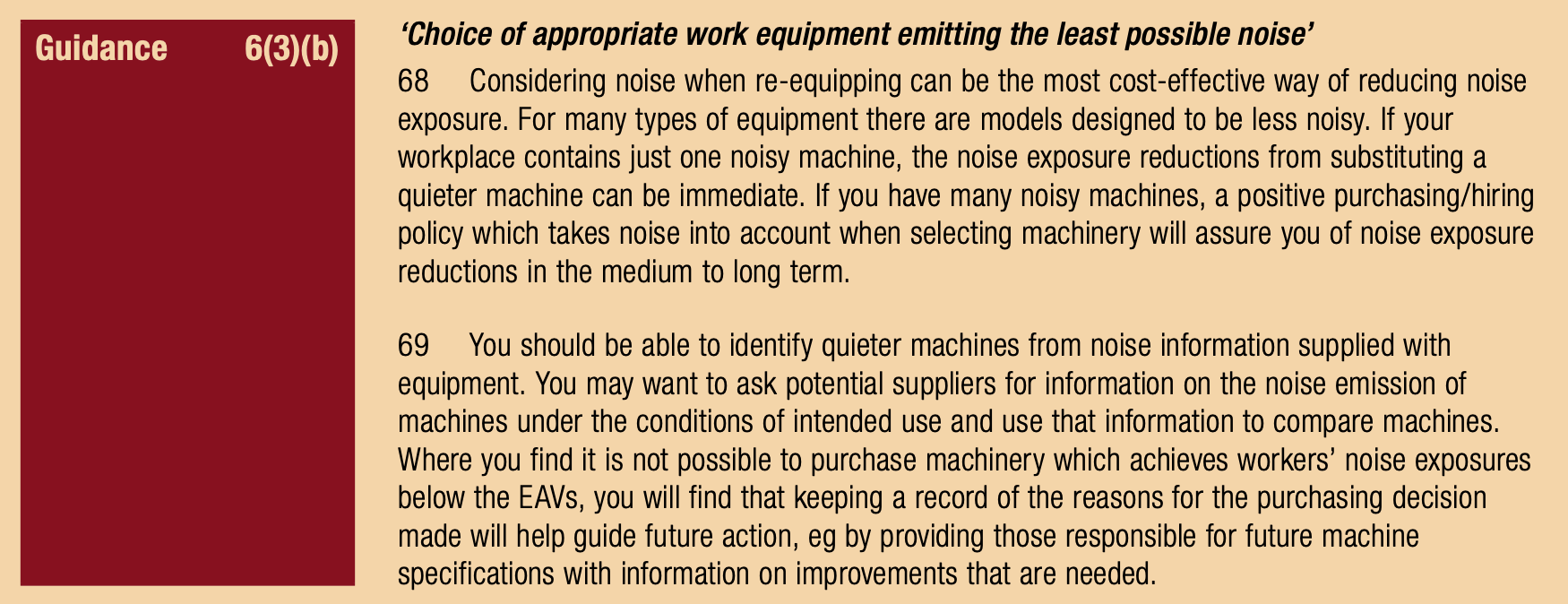
HSE’s guidance on buying quieter in L108
They then expand on this further on their website where they have a specific set of advice on companies having a ‘Buy Quiet’ policy in place.
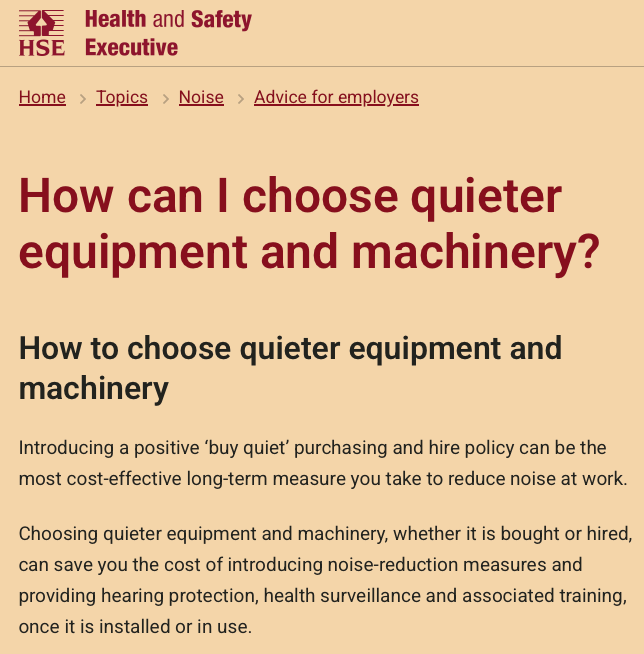
HSE website on having ‘Buy Quiet’ as part of purchasing.
Link: HSE website on Buy Quiet
Practical Example of Buy Quiet
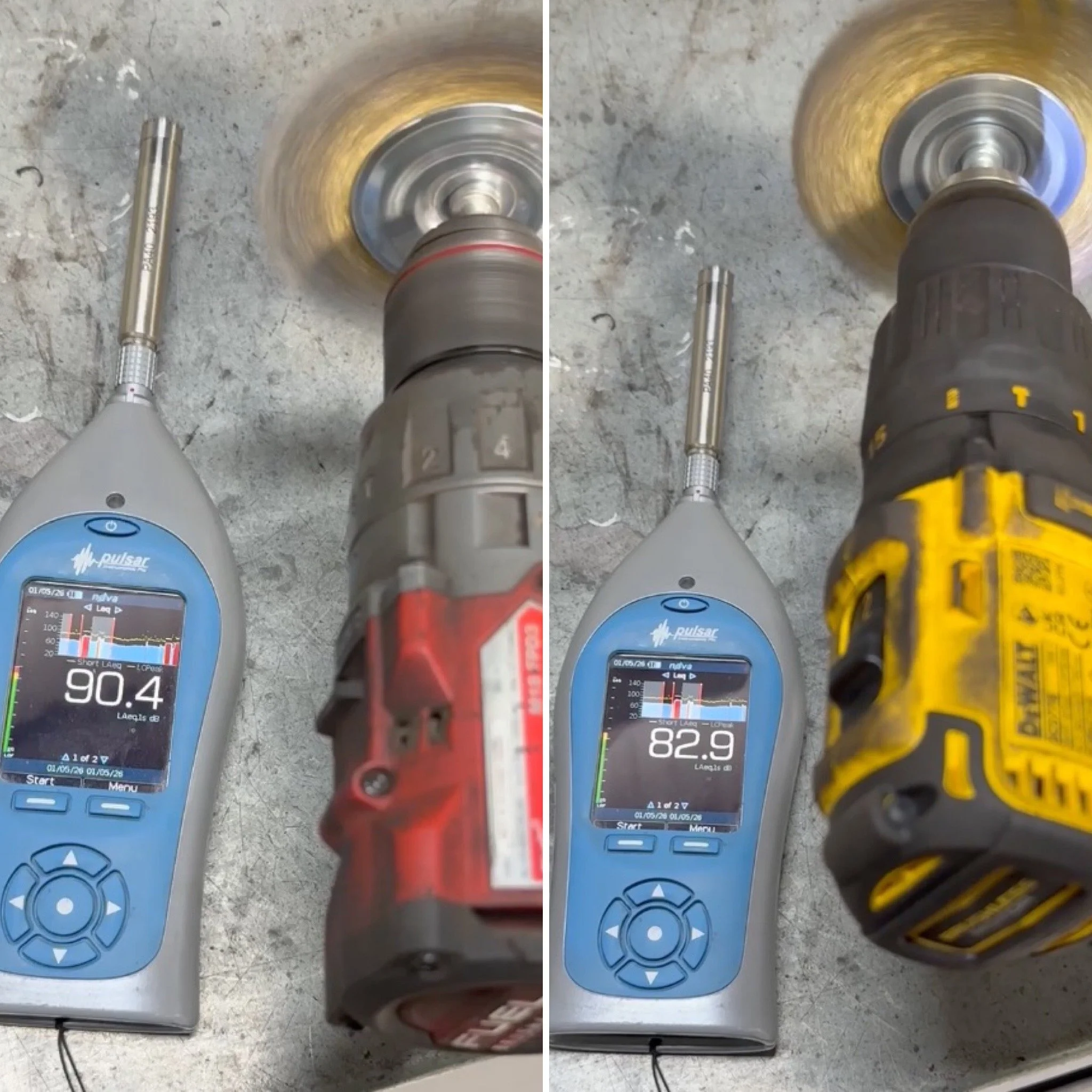
A simple way to show this is two tools being used to do the same job, in the same workshop. Both were impact drivers and both were used with the same wire brush attachments.
As all other influences were the same (same background noise, etc.) then it was easy to compare the two.
Video showing DeWalt and Milwaukee drills, showing the noise levels for each of them as they operate.
As you can see in this, the noise levels were considerably different when comparing the DeWalt and Milwaukee drills.
In this video, the DeWalt is around 3 dB quieter than the Milwaukee. 3 dB may not sound like a large change in noise level but that equates to a halving of the noise risk.
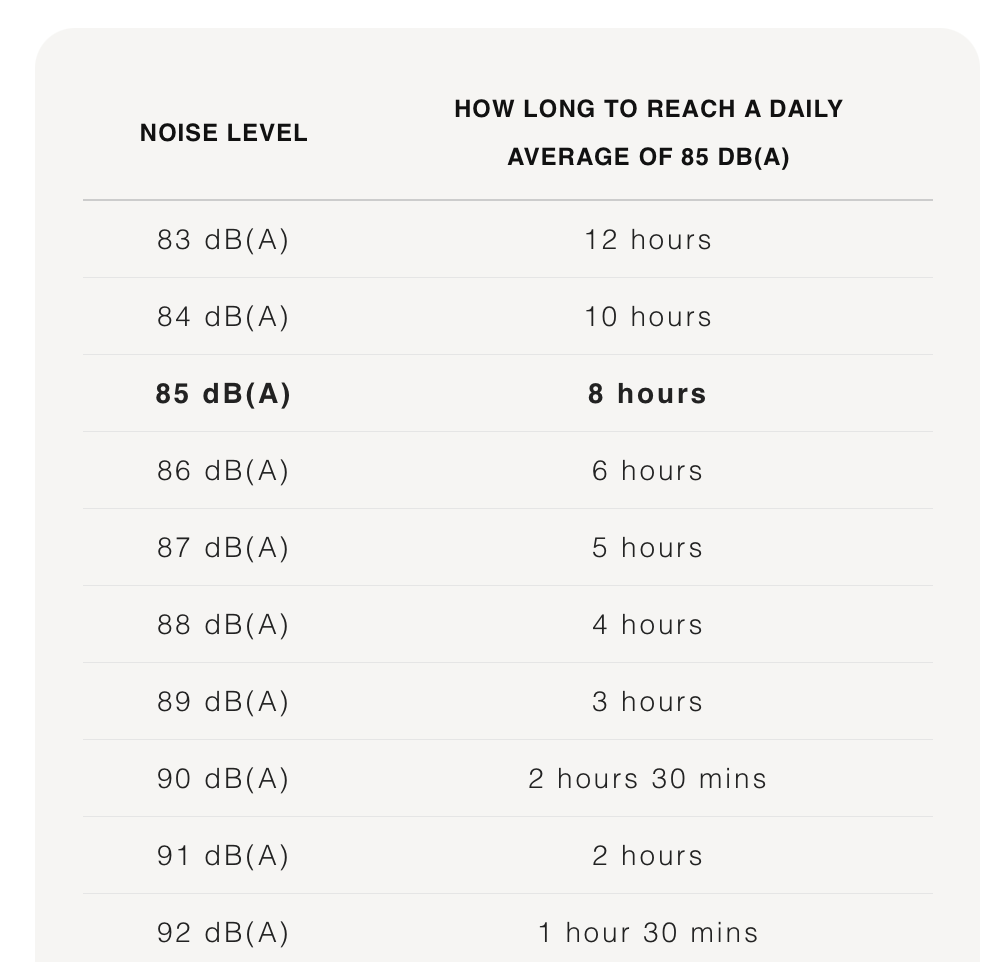
When you translate the noise levels in that video into a statement on ‘how long can this tool be used before noise exposures become dangerous’, for these two drills the DeWalt could be used for five hours while the Milwaukee could be used for two and a half hours. That makes the difference in noise risk a little more stark to see.
When it comes to a ‘Buy Quiet’ policy therefore, when replacing these tools, buying the DeWalt ones will have a beneficial impact on the noise exposures, lowering noise risks for staff, and be in compliance with the requirements of Regulation 6 of the Noise Regulations.
Buy Quiet really is that simple - if multiple tools will do the same job, buy the quietest one.
Summary of what Buy Quiet means
The HSE aren’t saying that noise levels have to be the main priority when looking at new equipment but that it should be one of the considerations. They are not saying you should have worse tools.
If you have a choice of tools which are capable of doing the same job, have a policy in place that you will choose the one with the lowest noise levels.
For large companies with Purchasing departments, make sure this policy is part of their purchasing objectives.
FAQ: Buy Quiet policies
Do we have to get rid of our existing noisy tools to buy quieter ones?
Actually yes, you do if it is possible, but that is beyond what ‘buy quiet’ means.
As well as buying quieter tools as part of purchasing, Regulation 6 also says that where there is a noise risk employers should reduce noise where reasonably practicable. So yes, this does mean tools should be replaced if this can reduce the noise levels. But, ‘Buy Quiet’ is a different thing, Buy Quiet is specifically about purchasing decisions.
We could buy two tools, one of them is quieter but not as good at the job. Do we have to buy it?
If there is a justification for why the noisier one is going to do the job but the quieter one will not then no, you do not have to buy the quieter one. But, I would recommend you keep records of why that decision was made. There is nothing saying you have to use worse tools, but that all things being equal, buy the quietest one.
More information on managing noise risks at work






Article last updated May 2026