
dB(A) and dB(C) data in noise assessments
In a noise assessment you will see a few different types of noise data presented. Noise is measured in decibels, but not all decibels are the same and we split them into dB(A) and dB(C).
Key points: dB(A) and dB(C) in noise safety
The human ear doesn’t hear all sounds the same, we hear some frequencies of sound more sharply.
dB(A) is a way to measure the noise where the noise meter listens to it in the same way the human ear does - it gives more weight to some high frequency noises.
dB(C) is more of a flat response - all frequencies are treated equally.
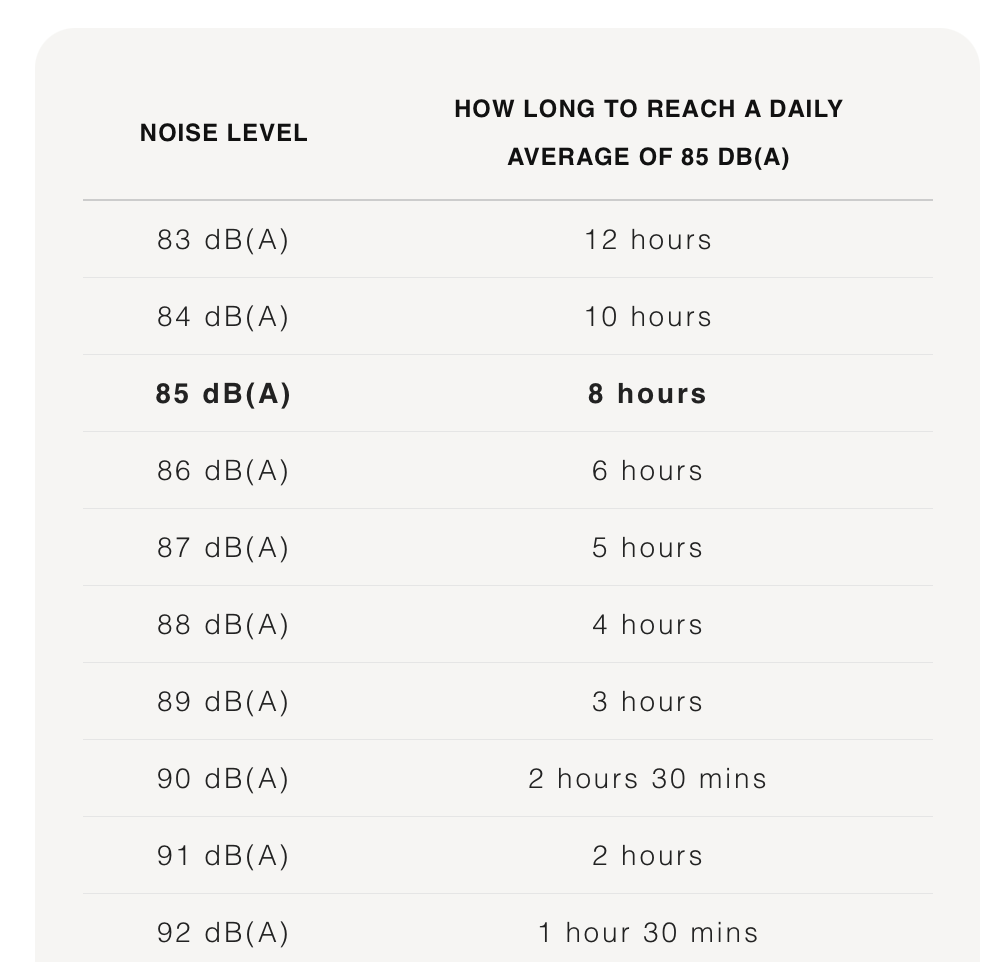
In noise safety, we are interested in the average dB(A) over time, usually an entire day, not really how high it goes in individual instances. This equates to the 85 dB(A) legal limit.
In dB(C), the exposure time doesn’t matter, this is ‘peak’ noise meaning a quick bang or impact. This equates to the 137 dB(C) legal limit.
dB(A) and dB(C) in noise assessments
The short version is that dB(A) is the average noise exposure over a cycle or shift, while dB(C) is short instantaneous bangs or impact noise.
There are limits for both and both apply equally in a noise assessment.
dB(A) figures in a noise assessment
For most people, these are considered the main figure. The daily limits of 80 and 85 dB(A) are given as dB(A) so this is usually the first one referred to.
The ‘A’ in dB(A) doesn’t actually mean ‘average’ but if you think of it that way then you won’t be all that far off really. (The ‘A’ means ‘A-weighting’)
The human ear doesn’t hear all noises the same and we hear some frequencies more keenly than others. Think of those particular sounds which kind of get in your head such as a high pitched shriek. Your ear is hearing those more acutely than other frequencies and those sounds are important in how we understand speech. We use those to give speech a lot of its meaning and this amplification effect helps us to hear what someone is saying over a loud background noise.
As you are more sensitive to those sounds, when noise is measured in a noise assessment, the reading is tweaked slightly so the noise meter is recording the noise level in the same way the ear hears it and that kind of adjustment is called dB(A).
dB(A) is what is used to work out an average daily noise exposure, hence if you think of ‘A’ as average its actually also kind of correct.
dB(C) figures in a noise assessment
dB(C) is another type of weighting used when measuring noise risk, in this instance treating all the frequencies more evenly. We use dB(C) for two things:
dB(C) as peak or impact noise
As well as the daily average limits the Noise Regs have limits for dB(C), these being 135 and 137 dB(C). In this case the dB(C) is being used to measure impact noise - unlike dB(A) the duration of the noise doesn’t matter, it is that moment of immediate impact on the ears which is being measured.
The power of the noise in that instant is enough to damage hearing.
The best example I can think of where this is important is in a packing warehouse. Usually these kinds of places are pretty quiet and may have an average dB(A) of say 75 dB(A), so well below the 80 and 85 dB(A) limits in the Noise Regs. However, someone then drags a pallet to where it is needed and rather than lowering it just lets go so it crashes to the ground. That can create a peak of ≈138 dB(C). Do that often enough and it will start to cause hearing problems no matter what the average noise level is.
Another example would be golfists - they wander around outside in a generally low environment, then whacking a golf ball with a titanium golf club can give an instant noise of 140 dB(C) or more. Same with shootists - quiet and then bang, that bang is what dB(C) focuses on.
It is normal for the peak dB(C) figure in a noise assessment to be far higher than the average dB(A) - that doesn’t mean there is a problem with the noise levels or the noise assessment itself. A result of say 88 dB(A) and 119 dB(C) for a job is entirely normal. Remember, the limits for dB(C) are a lot higher, at 135 and 137 dB(C).
dB(C) as a means to assess hearing protection
The simplest-yet-still-effective way to assess how good hearing protection is performing is to use the SNR of the hearing protector. SNR, Single Number Rating, is a figure for how many decibels the hearing protector reduces the noise by. What you do is subtract the SNR of the hearing protector from the average dB(C), add 4dB back on for slightly incorrect wearing, and that tells you what the noise level under the protector is.
Important - you use average dB(C) for this, not the peak dB(C) as that will give an incorrect result. More often than not the average dB(C) is in the vague vicinity of the dB(A) average.
FAQ: dB(A) and dB(C)
My noise meter only does dB(A), is that OK?
No, that would mean the noise meter is not good enough to use for a noise assessment. You need to have the average dB(A) and the peak dB(C).
My noise meter tells me the dB(A) over a few seconds on a ‘slow’ setting, is that OK for a noise assessment?
No, for a noise assessment a noise meter must be integrating which means it will average the noise over whatever time period is needed - hours if necessary.
I see massive dB(C) figures in a noise assessment, is that a problem or an incorrect noise assessment?
It is perfectly normal to see the peak dB(C) figure be a lot higher than the average dB(A). For example, a result could be 88 dB(A) and 122 dB(C) - that is normal.
If you close a door moderately hard that will be 110 dB(C), high dB(C) figures are normal. If it goes over 135 dB(C) then it becomes an issue.
Other information and help relating to managing noise risk












Article last reviewed and updated 26th April 2026