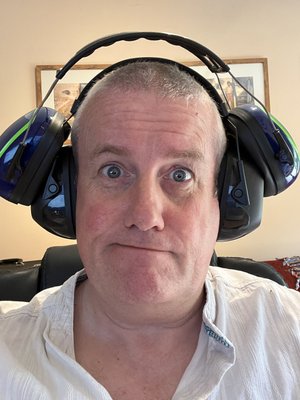

How long does hearing protection last?
Ear muffs and ear plugs have a maximum life expectancy as performance degrades over time, and that occurs whether the product is in daily use or not.
Key points: Shelf life of hearing protection
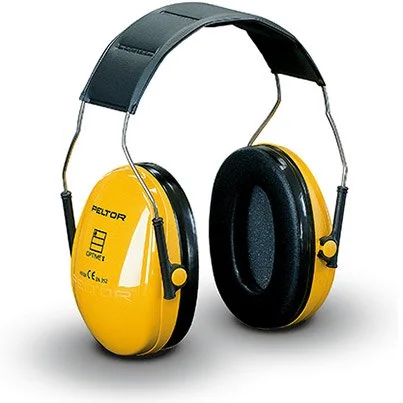
Ear muffs can last a long time but do not have an unlimited working life.
Generally, life expectancy of ear muffs is between two and five years.
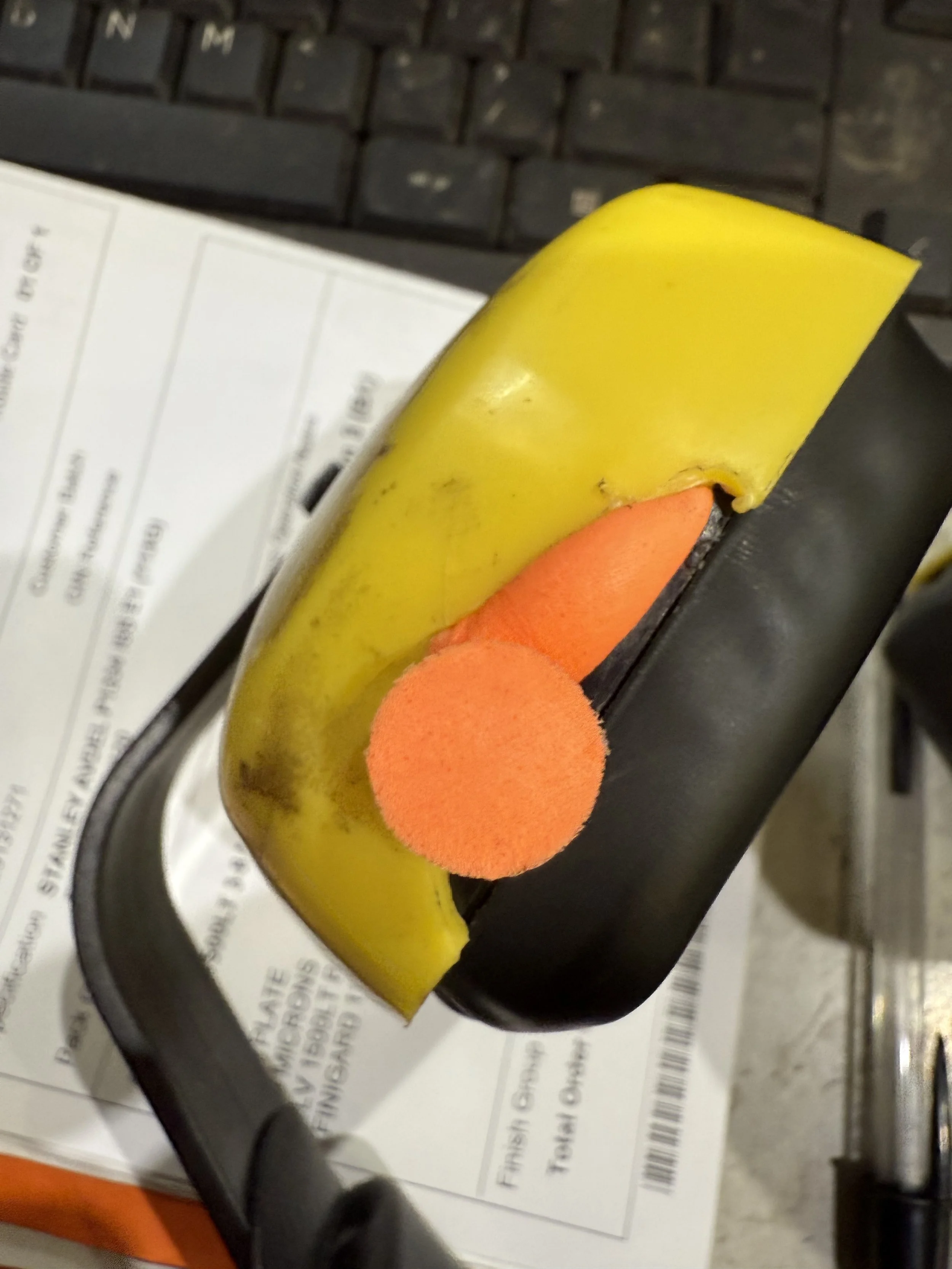
A lot of ear muffs also require the cushions and foam inserts to be changed every few months of use.
A limited life-span also applies to ear plugs, both disposable and reusable.
Employers must have a programme in place to replace them as their life expectancy is reached.
For most hearing protection, the starting date of this life-span is the date of manufacture, not the date you bought them or started using them.
Shelf Life versus Service life
There are two factors which employers should consider when managing hearing protection:
Shelf Life
This starts on a specific date and then counts down from there, whether the product is used daily or not.
Service Life
This is how many times a product can be used before needing to be replaced.
Some products, such as the higher-end muffs, have replaceable parts which you need to change in order to maintain the hearing protector for its expected shelf life.
For example, many disposable plugs have a shelf life of ‘five years’ when in storage, but a service life of ‘single use’. Muffs may have a shelf life of five years but you need to change the cushions every six months in order to meet that - the muff overall has a shelf life of five years but the cushions have a service life of six months.
Date of manufacture (DoM)
Unless otherwise stated, the shelf life or life expectancy of a hearing protector starts from the date of manufacture, not the date they were opened and started to be used. Headbands will lose tension over time, even in storage, and cushions can start to degrade slowly before they are first used.
For ear plugs, over time the ability of the expanding foam ones to form a good seal will degrade, making them less effective. Again, this can happen even in storage, not just in use.
The date of manufacture should be on the box or packaging the product comes in. Many providers also include the expiry date next to it on the box. For example, Honeywell Laser Lite plugs come in a box which gives both the date of manufacture and the expiration date.
In a small number of instances, a manufacturer may state ‘date of first use’ instead but this is the exception rather than the rule. Unless you have something to the contrary, use the date of manufacture as the start date for counting down the life expectancy.
That means products can lose shelf-life even in storage before they are used.
Life expectancy of ear muffs
How long an ear muff’s life expectancy is will depend on the quality of the ear muffs initially. The more budget ones may need replacing after two years, while the more premium end of the market will often say five years. For example:
3M’s Peltor ear muffs are at the upper end of the quality range for ear defenders and 3M state a maximum shelf life of five years for the Peltor range.
Beeswift’s BBED muffs are perfectly good but sit at the more budget end of the market and have a shelf life of two to three years.
The table lower down this page has the shelf life information for a selected range of ear muffs / ear defenders.
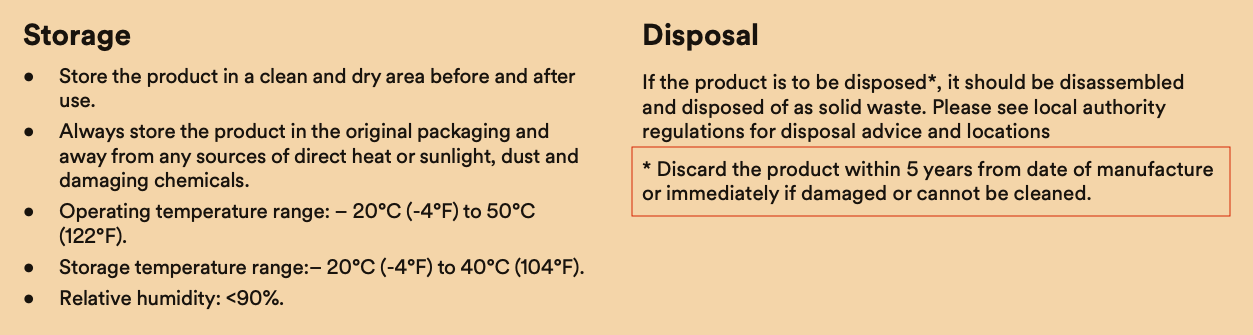
3M Peltor user instructions stating five year shelf life
Not all manufacturers are overly clear with their performance data and some may not give the shelf life information. In the absence of anything to the contrary, I would recommend you take five years as a hard limit for all hearing protection.
Ear muffs - changing the cushions and inserts to keep using them
All the manufacturers of the mid- and higher-priced muffs usually say their shelf life is dependant on the cushions and foam inserts being changed regularly, usually every three or six months of use unless they are showing signs of degradation before this point.
3M, Moldex, Honeywell, etc. sell ‘hygiene kits’ consisting of the cushions and foam inserts and these are what is needed for that six monthly maintenance in order to continue using the product up to the expected shelf life.
At the budget end of the market the cushions on the muffs may be glued on and are not replaceable. For these, the entire ear muff will need to be replaced when the cushion starts to get hard or shows signs of creases or cracks. They cannot be replaced to extend the usage life.
Life expectancy of ear plugs
Ear plugs also have a life expectancy and again, this is from the date of manufacture.
EAR Classic user instructions stating a five year limit
3M make this clear in their user instructions, such as this from the EAR Classic information, the typical yellow foam ones, where it states a five year life expectancy.
For reusable plugs, the manufacturer will often give both a shelf life for them and guidance on how many times they can be reused before needing to be replaced.
As with muffs, in the absence of any manufacturer statement to contrary, I would recommend using five years as the shelf life. The table below gives some stated life expectancies of selected ear plug products.
‘Wearing time’ for ear plugs is different to life expectancy
Some ear plugs have a stated ‘wearing time’ or ‘usage time’ as part of their service life, i.e. how long they can be used for before needing to be disposed of. This is particularly relevant to reusable ear plugs but some disposables also have it.
Wearing time is based on daily use whereas life expectancy is a simple countdown from a starting date.
If you are providing reusable ear plugs of any type, check the documentation which came with them as this should state how many individual times they can be used. For example, Uvex Whisper plugs are good for five years in terms of shelf life, but can only be actually used for up to four weeks.
Ear plugs - changing tips on some models
For banded ear plugs or products such as ISOTunes, Loop, etc., the hard plastic element may go on for several years but the tips which go into the ear need changing regularly, and each manufacturer specifies when this should be.
While the plug itself may have a shelf life of several years, the tips may have a service life of only a few weeks or up to six months.
Life expectancy of personally moulded ear plugs
These are the plugs which are moulded to fit an individual user.
Again, the manufacturer should give you a life-expectancy date with them but in the absence of that, the five year mark is the safe one to use.
The reasoning behind this is a little different for personally moulded plugs compared to other hearing protection. While the material itself may degrade over time, more important is that as we get older our ears continue to grow and change size and shape - that’s the reason old men have ears like a human elephant. As that happens the ear canal itself also changes size and shape and over time the personally moulded plugs fit less well. The seal degrades and more noise is able to get through.
Life expectancy of multi-part products
Be aware that some products have individual parts which will go on much longer than other parts. For example:
Loop ear plugs consist of a harder body and then a soft tip. The tip should be replaced after six months while the body itself can go on for five years.
Moldex say the Waveband banded plugs have an unlimited shelf life, but as they use a deformable foam plug we have to assume the ‘unlimited’ element applies only to the plastic band on which the foam plugs sit.
Tip: Avoid bulk buying hearing protection
Expired ear plugs
As the clock starts ticking on a lot of hearing protection from the date it is made, not the date it was bought or first used, avoid bulk buying more than you actually need. A product sitting in a cupboard for a long time is probably counting down its shelf life.
I do see boxes of things like ear plugs which have been in storage for so long they have reached their expiry date before they started to be used.
For example, Detectamet plugs have a life expectancy of three years but I came across this box of ear plugs in 2026 which had a date of manufacture as July 2022 - they had already expired before starting to be used.
Life expectancy and usage limits for some hearing protection
I have done some digging around on websites, trawling through data sheets and going over sets of user instructions or contacting some manufacturers directly to identify the stated shelf life for a range of hearing protection, along with any specifications for how many times they can be used or requirements for changing individual parts, where they state it.
| Protector | Shelf life | Clock starts | Service life | Data source |
|---|---|---|---|---|
| 3M | ||||
| 1100 / 1110 earplugs | 5 years | DoM | Single use | User instructions |
| 1310 Banded earplugs | 3 years | DoM | Change tips when dirty | User instructions |
| E-A-R Caboflex | 3 years | DoM | Change tips when dirty | User instructions |
| E-A-R Classic | 5 years | DoM | When do not expand | User instructions |
| E-A-R Flexicap | 3 years | DoM | Change tips when dirty | User instructions |
| E-A-R ReFlex | 3 years | DoM | Change tips when dirty | User instructions |
| E-A-R Ultrafit | 5 years | DoM | Not specified | User instructions |
| E-A-RBand | 3 years | DoM | Change tips when dirty | User instructions |
| E-A-RCaps | 3 years | DoM | Change tips when dirty | User instructions |
| E-A-RSoft FX | 5 years | DoM | Single use | User instructions |
| E-A-RSoft Yellow Neon | 5 years | DoM | Single use | Technical Data Sheet |
| Peltor Optime I range | 5 years | DoM | Change cushions 6 monthly | User instructions |
| Peltor Optime II range | 5 years | DoM | Change cushions 6 monthly | User instructions |
| Peltor Optime III range | 5 years | DoM | Change cushions 6 monthly | User instructions |
| Peltor X series muffs | 5 years | DoM | Change cushions 6 monthly | User instructions |
| Peltor Worktunes Pro | 5 years | DoM | Change cushions 6 monthly | User instructions |
| Beeswift | ||||
| BBED Economy muffs | 2–3 years | DoM | 2-3 years of use | User instructions |
| BBFED Folding muffs | 2–3 years | DoM | 2-3 years of use | User instructions |
| BBSED Superior muffs | 2–3 years | DoM | 2-3 years of use | User instructions |
| QED504 Comfort muffs | 2–3 years | DoM | 2-3 years of use | User instructions |
| QED506 Comfort muffs | 2–3 years | DoM | 2-3 years of use | User instructions |
| Berner | ||||
| Banded ear plugs | 3 years | DoM | Not stated | Website |
| Reusable ear plugs | 5 years | DoM | Not stated | Website |
| Top ear muffs | 5 years | DoM | Not stated | Website |
| Delta Plus | ||||
| Conic2 | 3 years | DoM | Not stated | User instructions |
| Interlagos 2 | 2–3 years | Date first used | Not stated | User instructions |
| Interlagos Light | 2–3 years | Date first used | Not stated | User instructions |
| Magny Cours 2 | 2–3 years | Date first used | Not stated | User instructions |
| Magny Helmet 2 | 2–3 years | Date first used | Not stated | User instructions |
| Spa 3 | 2–3 years | Date first used | Not stated | User instructions |
| Suzuka 2 | 2–3 years | Date first used | Not stated | User instructions |
| Detectamet | ||||
| Disposable earplugs | 3 years | DoM | Not stated | Manufacturer message |
| Three flange earplugs | 3 years | DoM | Not stated | Technical Data Sheet |
| Two flange earplugs | 3 years | DoM | Not stated | Technical Data Sheet |
| DeWalt | ||||
| DPG12 Ear Plugs | 20+ years | DoM | Single use, change when dirty | User instructions |
| Honeywell (PIP) | ||||
| Laser Lite | 5 years | DoM | Single use | Packaging / box |
| SmartFit | Unlimited | na | Change 'regularly' - 'regularly' is not defined | User instructions |
| SmartFit Detectable | Unlimited | na | Change 'regularly' - 'regularly' is not defined | User instructions |
| VS100D | 3 years | DoM | Change cushions every 3 to 6 months | Manufacturer statement |
| VS110 | 3 years | DoM | Change cushions every 3 to 6 months | Manufacturer statement |
| VS110DH | 3 years | DoM | Change cushions every 3 to 6 months | Manufacturer statement |
| VS120 | 3 years | DoM | Change cushions every 3 to 6 months | Manufacturer statement |
| VS120DH | 3 years | DoM | Change cushions every 3 to 6 months | Manufacturer statement |
| VS130 | 3 years | DoM | Change cushions every 3 to 6 months | Manufacturer statement |
| VS140 | 3 years | DoM | Change cushions every 3 to 6 months | Manufacturer statement |
| ISOTunes | ||||
| Free 2.0 | 3 years | Purchase date | Change tips every 3 months | User instructions |
| Free Aware | 3 years | Purchase date | Change tips every 3 months | User instructions |
| Link 2.0 | 3 years | Purchase date | Not stated | User instructions |
| Pro 3.0 | Unlimited | Purchase date | Change tips every 3 months | User instructions |
| Pro Aware | Unlimited | Purchase date | Change tips every 3 months | User instructions |
| Pro Aware 2.0 | Unlimited | Purchase date | Change tips every 3 months | User instructions |
| Xtra 2.0 | 3 years | Purchase date | Change tips every 3 months | User instructions |
| JSP | ||||
| Big Blue / Invincible Big | 5 years | DoM | Not stated | User instructions |
| Classic GP | 5 years | DoM | Not stated | User instructions |
| Sonis 1 range | 5 years | DoM | Change cushions when needed | User instructions |
| Sonis 2 range | 5 years | DoM | Change cushions when needed | User instructions |
| Sonis 3 range | 5 years | DoM | Change cushions when needed | User instructions |
| Sonis C range | 5 years | DoM | Change cushions when needed | User instructions |
| Loop | ||||
| Engage 2 | 5 years | Not specified | Change tips every 6 months | Loop website |
| Experience 2 | 5 years | Not specified | Change tips every 6 months | Loop website |
| Quiet 2 | 5 years | Not specified | Change tips every 6 months | Loop website |
| Moldex | ||||
| Contours | 4 years | DoM | Single use | Moldex website |
| Jazz Band | Unlimited | Not applicable | Change tips when dirty | Moldex website |
| M-Series muffs | Unlimited | Not applicable | Change cushions every 6 months | Moldex website |
| Mellows | 4 years | DoM | Single use | Moldex website |
| MX-7 Helmet Mounted | Unlimited | DoM | Change cushions every 6 months | Moldex website |
| Pura-Fit | 4 years | DoM | Single use | Moldex website |
| Rockets | Unlimited | Not applicable | Not stated | Moldex website |
| Rockets Detectable | Unlimited | Not applicable | Not stated | Moldex website |
| Spark Plugs | 4 years | DoM | Single use | Moldex website |
| Waveband | Unlimited | Not applicable | Change tips when dirty | Moldex website |
| Z2 Basic Earmuff | Unlimited | Not applicable | Change cushions as needed | Moldex website |
| Portwest | ||||
| EP02 ear plugs | 3 years | DoM | One day / sooner if dirty | User instructions |
| EP04 ear plugs | 3 years | DoM | As long as remain clean | User instructions |
| EP06 ear plugs | 3 years | DoM | One day / sooner if dirty | User instructions |
| EP09 ear plugs | 3 years | DoM | Not stated | User instructions |
| EP10 reusable ear plugs | 3 years | DoM | As long as remain servicable | User instructions |
| EP20 ear plugs | 3 years | DoM | One day / sooner if dirty | User instructions |
| EP22 ear plugs | 3 years | DoM | One day / sooner if dirty | User instructions |
| PS41 Super | 2–3 years | Date first used | Not stated | User instructions |
| PS41 ear muffs | 2-3 years | Date first used | Not stated | User instructions |
| PS48 Slim | 2–3 years | Date first used | 2-3 years of use | User instructions |
| PW40 Classic | 2–3 years | Date first used | 2-3 years of use | User instructions |
| PW41 Super | 2–3 years | Date first used | 2-3 years of use | User instructions |
| PW48 Classic Plus | 2–3 years | Date first used | 2-3 years of use | User instructions |
| RS Components | ||||
| RS Disposable Detectable Plugs | 3 years | DoM | Single use | Packaging / Box |
| Scan | ||||
| Banded Foam Earbuds | 5 years | DoM | Change tips when dirty | Email from Scan |
| Collapsible Ear Defenders | 5 years | DoM | Not stated | Email from Scan |
| Foam Ear Plugs | 5 years | DoM | Single use | Email from Scan |
| Helmet Mounted Muffs | 5 years | DoM | Not stated | Email from Scan |
| Hi-Vis Ear Defender | 5 years | DoM | Not stated | Email from Scan |
| Silicone Ear Plugs | 5 years | DoM | Not stated | Email from Scan |
| Standard Ear Defender | 5 years | DoM | Not stated | Email from Scan |
| Tapered Foam Ear Plugs | 5 years | DoM | Single use | Email from Scan |
| Ultimate Industrial | ||||
| EMH5 helmet muffs | 5 years | DoM | Not stated | Email from manufacturer |
| EP103 ear defender | 5 years | DoM | Not stated | Email from manufacturer |
| EP103X ear defender | 5 years | DoM | Not stated | Email from manufacturer |
| EP106 ear defender | 5 years | DoM | Not stated | Email from manufacturer |
| EP106X ear defender | 5 years | DoM | Not stated | Email from manufacturer |
| EP107 ear defender | 5 years | DoM | Not stated | Email from manufacturer |
| EP107X ear defender | 5 years | DoM | Not stated | Email from manufacturer |
| Uvex | ||||
| Com4-fit | 5 years | DoM | Not stated | Customer Services |
| Hi Com | 5 years | DoM | One working day | Customer Services |
| Hi Com Detectable | 5 years | DoM | One working day | Customer Services |
| K series muffs | 5 years | DoM | Change cushions every 6 months | Customer Services |
| Whisper | 5 years | DoM | 4 weeks of use | Customer Services |
| Whisper Detectable | 5 years | DoM | 4 weeks of use | Customer Services |
| Whisper+ | 5 years | DoM | 4 weeks of use | Customer Services |
| Whisper+ Detectable | 5 years | DoM | 4 weeks of use | Customer Services |
| Xact-fit series | 5 years | DoM | 4 weeks of use | Customer Services |
Where the 'clock starts' is 'Not specified' this means the manufacturer has given a stated shelf life but I have not found whether it is from date of manufacture or date first used. In the absence of a specific figure, assume it is the date of manufacture.
All ear muffs manufacturers include a clause that shelf life is dependant on proper storage, use and cleaning.
Additional notes:
Honeywell: All Honeywell’s range and branding was sold to PIP in 2025 but it is still sold under the Honeywell name.
Moldex: For the banded plugs, Moldex only say ‘unlimited’ but I would guess this refers to the plastic band and not the soft foam tips. Moldex do not give a specific shelf life for the changeable tips but as their other foam plugs have a stated shelf life of four years then this would be the prudent time period to use.
Scan: A handy tip for Scan muffs is that if the marking on the muff says ‘CE’ and doesn’t show ‘UKCA’ then they will be beyond their shelf life now. (Scan’s older products without the UKCA have a three year shelf life rather than the current five years).
"Unlimited" shelf life: This is always subject to the manufacturer's storage and maintenance requirements being met, this means cleaning and/or changing of replaceable parts such as cushions.
Banded plugs: These often say to ‘change the tips when dirty’. They are different to standard foam ear plugs as they sit on the opening of the ear canal rather than going into it, hence their ability to re-expand after use is not overly critical. That’s why you see the ‘change when dirty’ proviso for some banded plugs but not for disposable foam ear plugs.
Hearing protection which has ceased production
Products are continually added or removed from the market. Where a product was removed from production longer ago than its normal shelf life, employers should replace it as it will now be beyond its usage period.
| Product | Ceased production | |||
|---|---|---|---|---|
| Honeywell (PIP) | ||||
| Bilsom range of muffs | Discontinued around 2020, will all be expired now. | |||
| Clarity range | Discontinued around 2020, will all be expired now. | |||
| Leight / Leightning range | Discontinued around 2020, will all be expired now. | |||
| Mach 1 muffs | Discontinued around 2020, will all be expired now. | |||
| Viking V1 and V3 muffs | Discontinued around 2020, will all be expired now. | |||
| ISOTunes | ||||
| Air Defender | Discontinued in UK in 2025 | |||
| JSP | ||||
| Inter Ex | Discontinued 2024, will all finally expire 2029 | |||
| Inter GP | Discontinued 2024, will all finally expire 2029 | |||
| Supamuff | Discontinued 2024, will all finally expire 2029 | |||
| Surefit Contour muff | Discontinued 2024, will all finally expire 2029 | |||
| Scott Safety | ||||
| All Zone range of muffs | Discontinued around 2017, will all be expired now. | |||
These are just products where I can find an idea of when they were discontinued.
FAQ: Life expectancy of hearing protection
We bulk-bought hearing protection and have them in a cupboard, can we count the time-limit from the date people started to use them?
No, the life expectancy starts from the date of manufacture which should be on the box. The only exception is if the manufacturer specifically states their product’s use-by clock only starts at the time of first use.
Ear plugs will degrade over time, even in their box, and ear muffs can lose some of their headband tension. Avoid bulk-buying and only buy what you will use in the next few months to avoid having stock going out of use before it is actually worn.
If we put new cushions on ear muffs, will they go beyond the stated life expectancy?
No. Replacing the cushions means they are more likely to be usable up to the limit of the life expectancy but will not push the ear muffs as a whole beyond it. Over time the headband will have less tension making the ear muffs less effective overall.
Are cheap ear muffs OK to use rather than the pricier ones?
Absolutely, yes. The only issue will be a shorter life expectancy and often the cushions are not replaceable, but they are perfectly good to use. You will need to replace them more frequently but people still lose and damage the more expensive ones anyway so it is a cost/benefit choice to look into.
Our ear plugs have a date of manufacture on the box but no expiry date on the box or on the leaflet inside the box, can we use them indefinitely?
In the absence of a manufacturer giving a specific expiry date you should go with the five year maximum life expectancy as you have no proof that longer is OK.
An example is the Portwest EP08 reusable plugs. There is a date of manufacture on the box but Portwest don’t give any expiry date alongside it on the box, nor is a maximum shelf life detailed in the user guide inside the box. As there is nothing saying ‘unlimited’ for example there is then no proof they can last indefinitely, therefore go with the more generally accepted five year limit.
I have some moulded ear plugs which I like, can I carry on using them?
If they are within the manufacturer’s stated shelf-life then yes, but if they are beyond that then no. Similarly, if there is no stated shelf life then I would go with five years as the maximum period before stopping using them.
More information on managing hearing protection in the workplace













Article last updated July 2026: Added the in-service usage limits / requirements info.