
Key points: Reusing foam ear plugs
There can be a temptation to reuse foam ear plugs to reduce cost but foam ear plugs should not be reused multiple times.
If there is nowhere clean to store them when taken out, then as they cannot be washed they should not be reused.
The foam degrades and compresses with repeated use, reducing the attenuation they provide.
The video covers the issue, or for those who prefer reading it is explained below.
A review of why disposable foam ear plugs cannot be reused, covering both hygiene and performance issues.
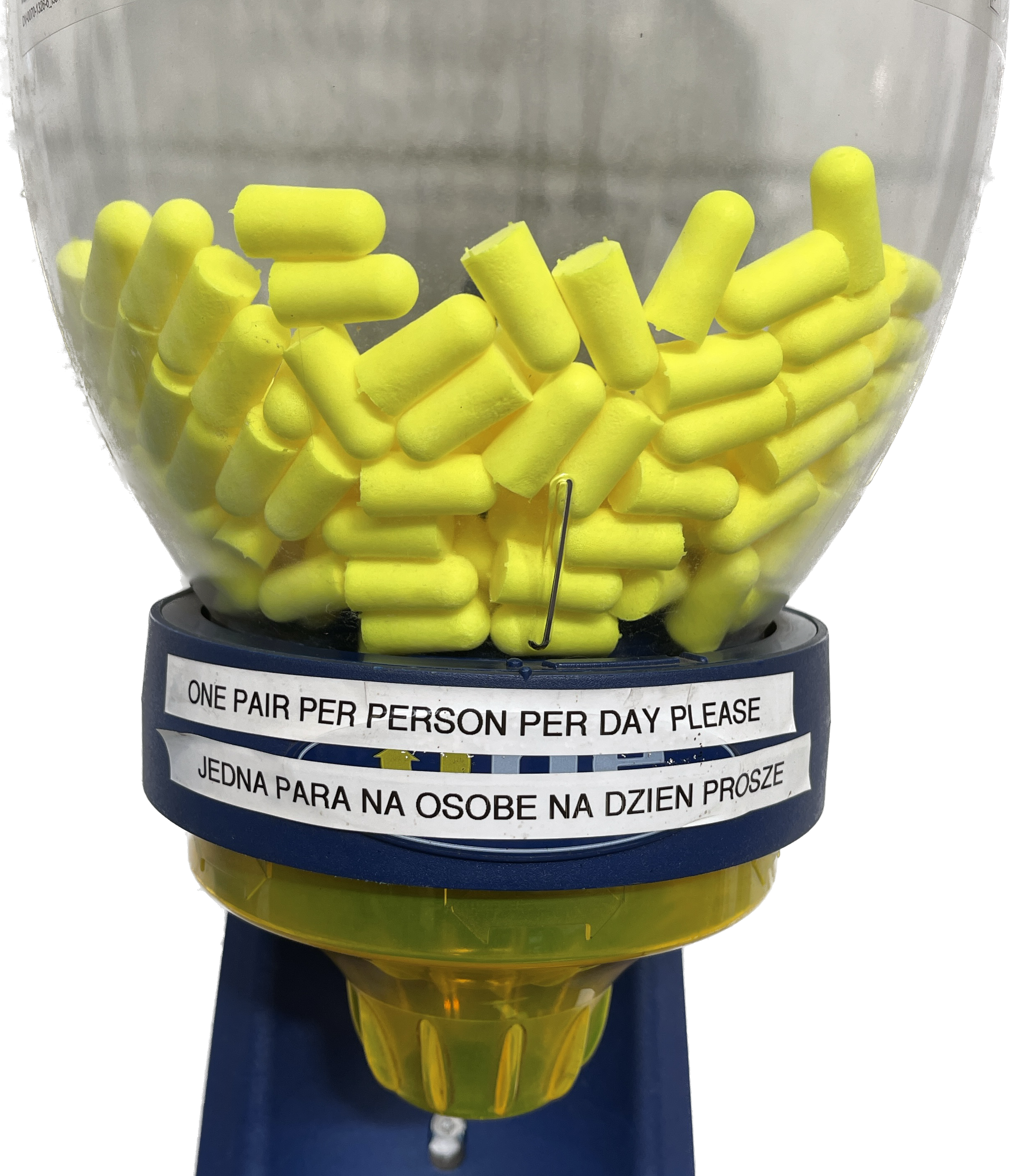
Ear plug dispenser
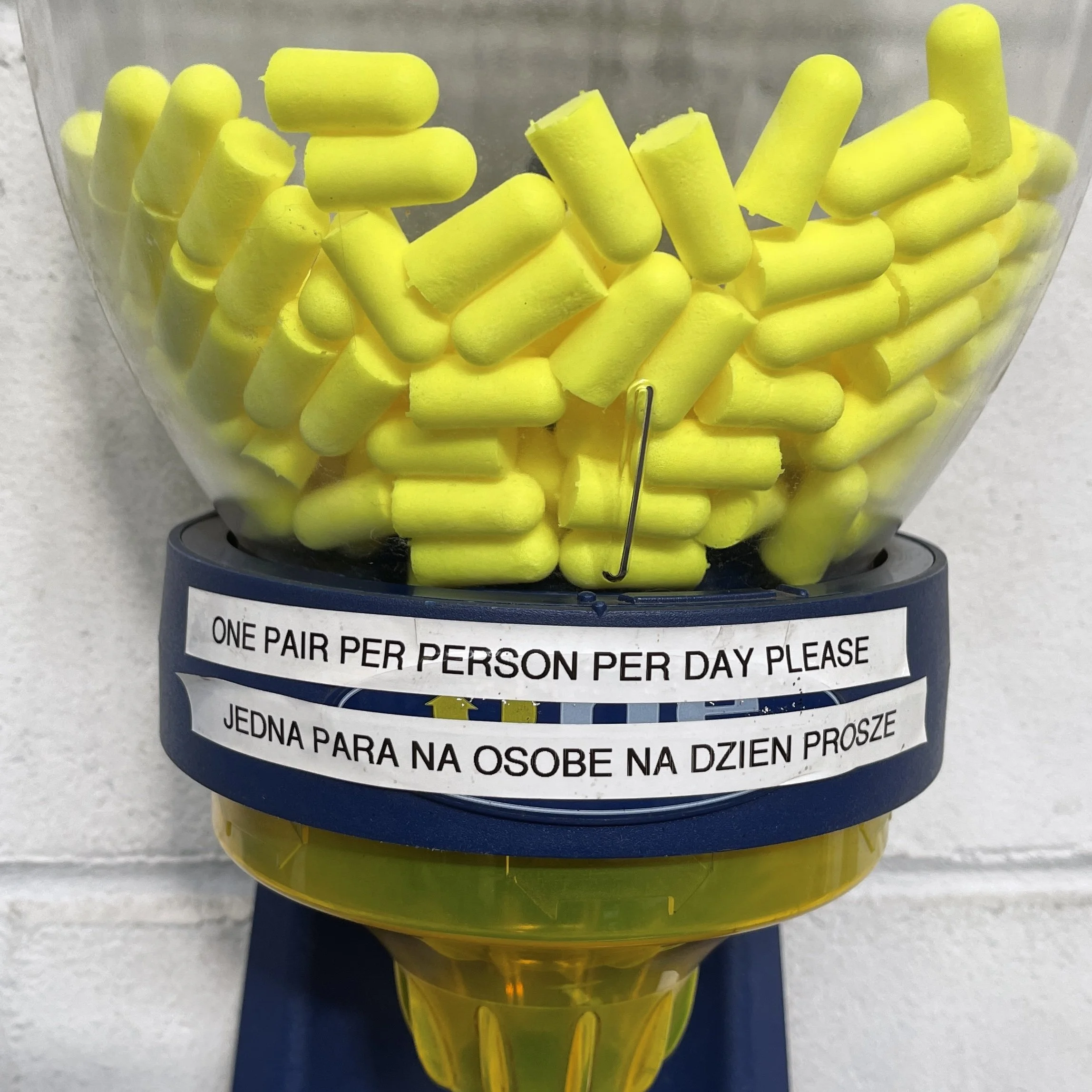
I have seen employers set limits on how many ear plugs people can use, such as this site where they were limiting the disposable foam plugs to one pair per person per day, but this cannot be done.
There are good reasons for this, both in terms of hygiene and also effectiveness of the ear plug.
Limiting use of ear plugs due to cost
I do understand why employers do it - ear plugs can be expensive. If we take a basic standard ear plug of the Laser Lite, the foam ones which look like pear drops. They cost around 15p per pair. An average full time person works about 220 days a year, and if we assume a pair of plugs in the morning and another after the lunch break, that’s 440 pairs of plugs per person per year.
The cost mounts up and for those 15p disposable foam ones that’s about £66 per person per year. If you have 50 staff that becomes a not-inconsiderable cost of around £3,300 every year.
Hygiene issues with reusing foam ear plugs
When you take an ear plug out to go on a break you need somewhere to put them and a pocket or a table are simply not clean enough. Any dirt or bacteria in your pocket will then be on the ear plug, and when you put it back in the ear the bacteria are now in a warm moist place, it is inviting ear infections.
A basic principle is that ear plugs do not cause ear infections, dirty ear plugs on the other hand, or indeed dirty hands when handling the ear plugs, that can certainly cause an infection.
Add to that, foam ear plugs are simply not designed to be washed and then worn, they don’t work that way - you cannot adequately wash them and then put them back in.
Performance of foam ear plugs degrades with reuse
Foam ear plugs work by the slight expansion power forming a good seal in the ear canal and to do that they are designed to be rolled up, inserted and then allowed to expand but the more you do that, the less effect there is of that expansion and the less protection is received.
To test the impact of that I did an experiment. As I have an audiometer I got a new pair of ear plugs, (EARSoft FX - yellow foam ones) and put them in. I then did a hearing test while wearing them. I then took them out and let them recover, then I rolled them up and inserted them again. I repeated that ‘roll up, allow to expand, remove’ process three times and then put them in and did another hearing test while wearing them. This is the audiogram showing the result of this experiment:
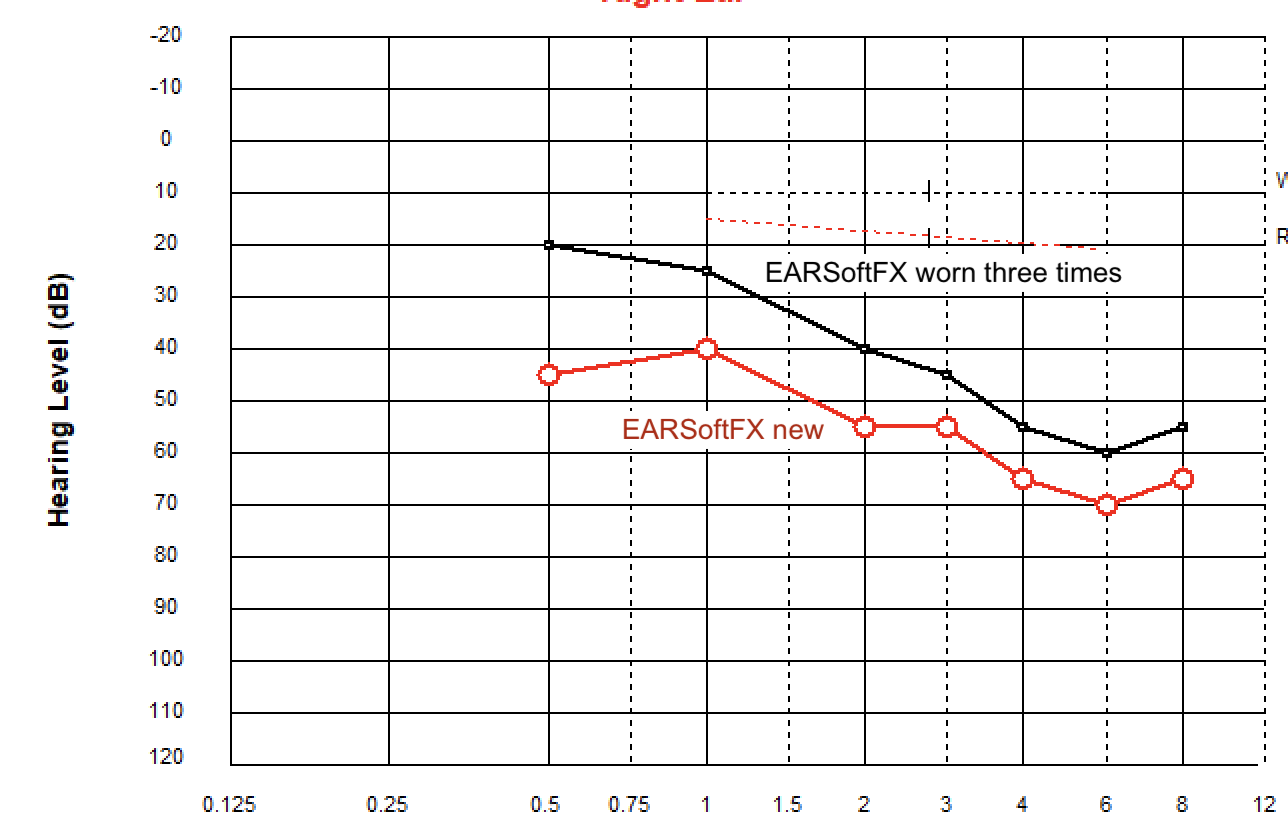
Hearing test result for new and worn ear plugs.
To eliminate other variables this was testing the same ear, in the same environment, using the same audiometer, undertaking exactly the same type of hearing test.
In a hearing test, the lower down the chart the result is, the more protection is being given - the louder the noise needs to be before you can hear it.
The red line was my result while wearing a brand new set of ear plugs.
The black line is the result after wearing them three times.
For the ear plugs which were reused, there is consistently less protection across the entire frequency range. It is at least 10 dB worse in some areas, increasing to 15 and even 20 dB less protection at the lower frequencies.
Repeatedly wearing the protectors has taken away a lot of the protection they would have had when new. These plugs when new have an SNR of 37 dB but at least 10 dB of that protection has been taken away by reusing them, and even more at the lower frequencies.
Solutions - buy reusable ear plugs
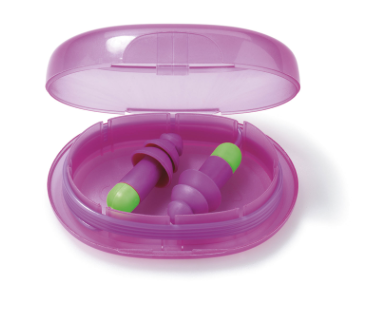
Moldex Rockets and case
It is quite easy to deal with this. Either stipulate foam ear plugs are use-once only, but more usefully you can get reusable ear plugs instead.
For example, the Moldex Rockets come in their own little case.
The plug itself is silicone so it can be washed, as can the case itself, and the case gives somewhere clean to store them when not being worn.
They cost a little more, for these it is about £1.68 for a pair but they can be reused for a long time.
For disposable foam plugs, that same £1.68 is only about eleven days of using disposable plugs so by day twelve the employer is saving money, and these Rockets can be reused much much longer than that.
So, if you want to save money on hearing protection, the solution is not to limit how many pairs of disposable ear plugs a person can use in any one day but to instead buy ear plugs which are designed for reuse, can be washed and have a case. It quickly works out much cheaper than disposable ones and avoids any infection risks from poor hygiene.
FAQ: Reusing foam ear plugs
Can foam ear plugs be washed and reused?
No, foam ear plugs cannot be effectively washed and dried. Water can damage the foam and reduce effectiveness.
How many times should you replace foam ear plugs?
They should ideally be replaced every time you take them out for a break or at the end of a shift. Maybe one or two reuses is OK providing there is somewhere clean and hygienic to put them, but without that do no reuse them.
Are employers allowed to limit how may ear plugs workers use?
No, under the Control of Noise at Work Regulations 2005 employers must provide adequate hearing protection and restricting the number of pairs available is not compliant with this.
More articles and advice on hearing protection at work