Noise assessments for non-routine jobs.
There can be a clash between what the HSE’s Noise Regs want and what actually takes place in some workplaces and a good noise assessment needs to tread the line between them, helping employers comply with the Control of Noise at Work Regulations 2005 while also making sure the noise survey is still accurately reflecting the workplace itself.
Key points on noise assessments in non-routine workplaces
In a lot of places the noise in the workplace is not consistent from day to day or week to week. Examples can be joinery or engineering fabrication factories.
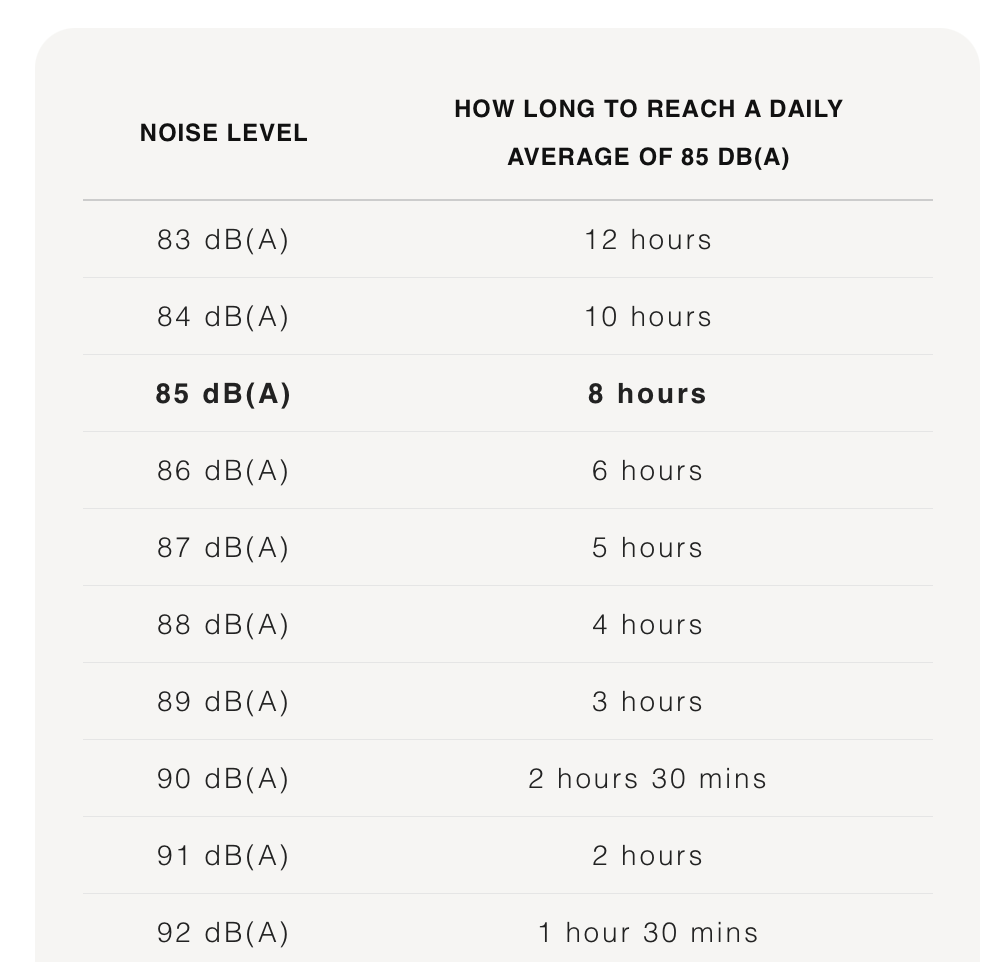
The Noise Regulations give the main 85 dB(A) limit as an average for a day, but measuring for a day in these types of environment will have no relevance to any other working day. A daily average for one day will be incorrect for other days.
In these instances, changing the noise assessment to become tool- or task-focused is the only practicable way to address it.
Cover of my noise assessment report
If a site is a large production line then a noise survey for it is actually very simple - the jobs are the same every day, all day, so what noise risk you assess on one day will be the same on other subsequent days.
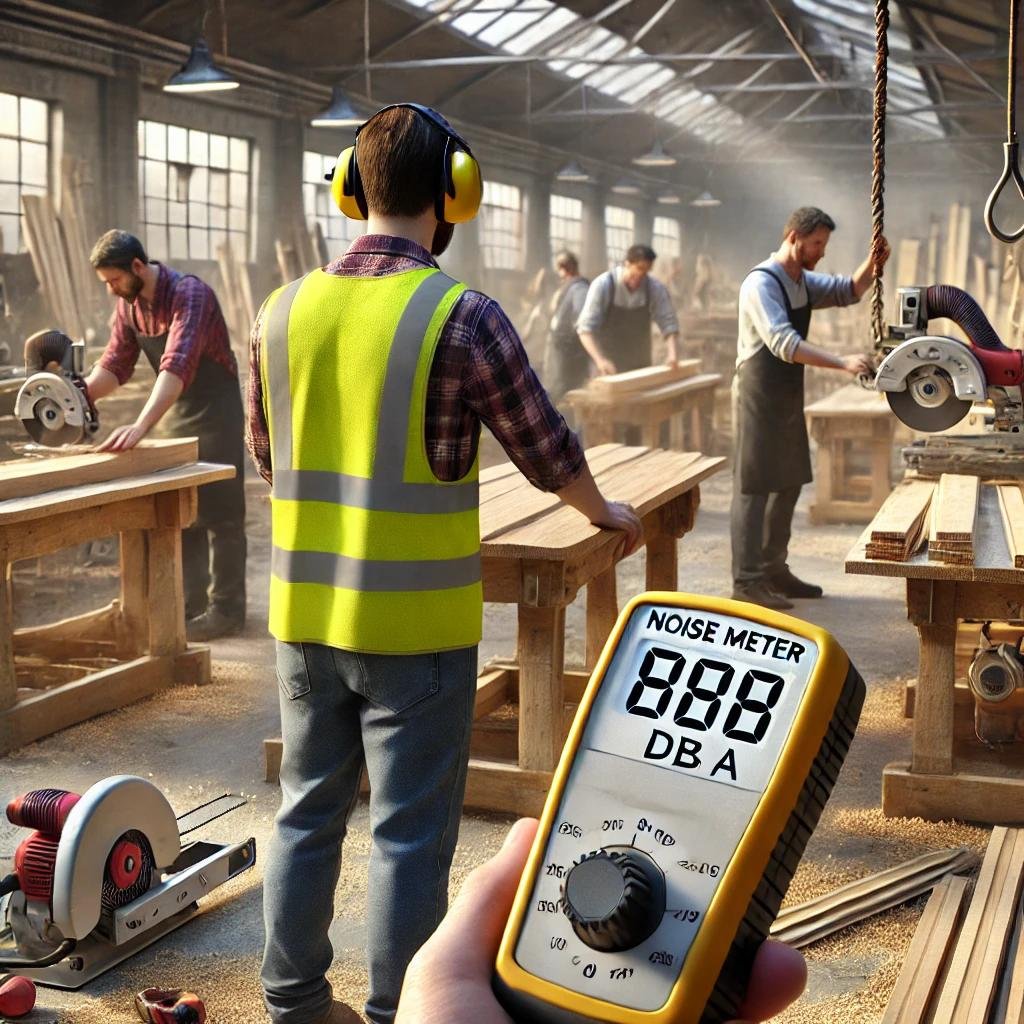
The problem in a noise assessment comes for places where there is no routine, for example a noise survey in a joinery workshop or small metal fabrication business which despite being small can be quite complex. In these places, what is done on one day often has no relation whatsoever to what is done on any subsequent day, so a noise assessment giving a definitive daily exposure risk level for the day of the survey will probably be irrelevant for most other days.
In these type of workplaces, people often do a job from start to finish, so rather than just doing one part of the process then passing it on they take the job from scratch to finished product. That means different tools used each day, and importantly for the noise assessment, those tools are used for different durations, and sometimes on different materials.
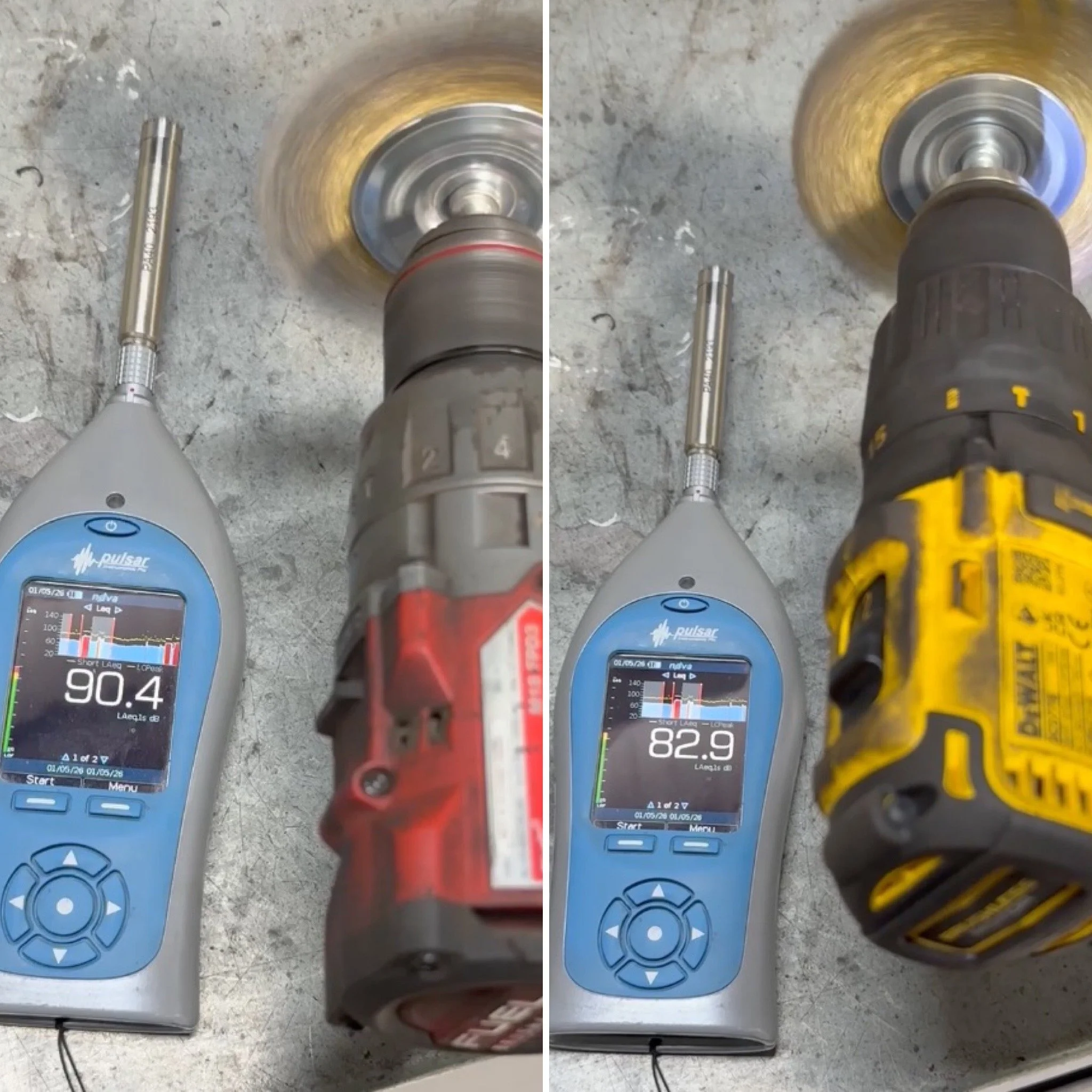
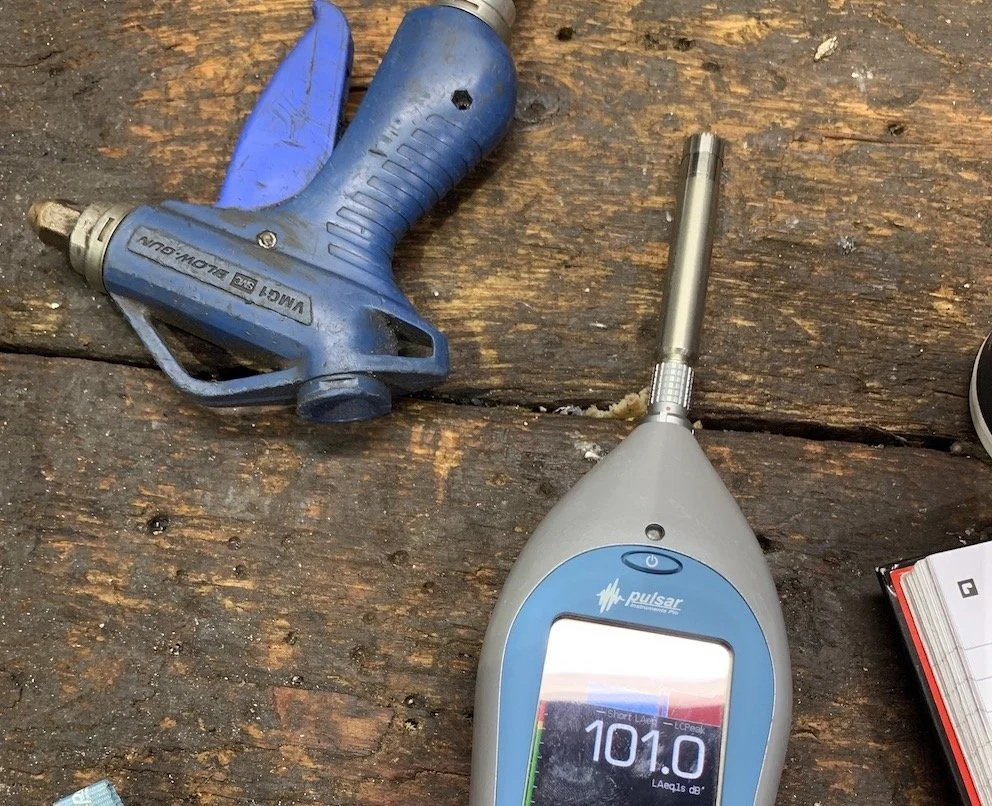
An element of practicality has to be allowed for a noise assessment for these kinds of workshops and I usually change the focus of the survey from an expected daily average figure to the sound level of the tools or jobs themselves. This is the only way a noise assessment can look at it really as if I give an expected daily average for one day it will be hopeless for all the others, and the variation in the tools and durations of use means almost limitless possible combinations of noise exposures in any one day.
By looking at the noise level of the tool itself a noise assessment can take that as the basis for deciding risk and what subsequent actions to take or recommend.
More information and advice on noise assessment
If you have ever used a hand dryer in a toilet and thought that it sounds very loud then you are likely correct. These are some noise levels from various hand dryers.
The Noise Regs say that employers should choose tools or equipment which have the lowest noise levels, and the HSE expand on this by saying employers should have a Buy Quiet purchasing policy, but what does this mean?
A noise assessment does need to be reviewed or repeated from scratch sometimes, but you don’t always have to get someone in to do it. This is guidance on when to review a noise assessment or get a new noise assessment done.
Noise survey vs noise assessment vs noise risk assessment - what do they all mean, what is the difference between them and what do employers need to have in place?
In a noise assessment you will see a few different types of noise data presented and it can seem a little baffling. Noise is measured in decibels, but not all decibels are the same, that would be far too easy.
Now that is a good question, the Noise Regs require an employer to do a noise assessment if they think there is a noise risk, but how do you know you have a noise risk without doing a noise assessment…?
Manufacturers of tools and equipment have an obligation to make data available on the expected noise level for their product. The HSE latch on to this and list this as a source of information which employers could use in deciding if there is a noise risk in the workplace?
A noise assessment will measure your noise risk levels, and anyone who has a noise exposure of 80 dB(A) or 135 dB(C) or more has to be included in a noise safety training programme. The HSE are very specific on what the noise safety training provided by employer should include.
Stereos at work can be important for employees, but when can you have stereos and when should they not be permitted, and how loud should stereos be at work?
How a noise assessment works on the day - what a client can expect. Covering everything from arrival on the site to measuring the noise levels and what a client needs to do.
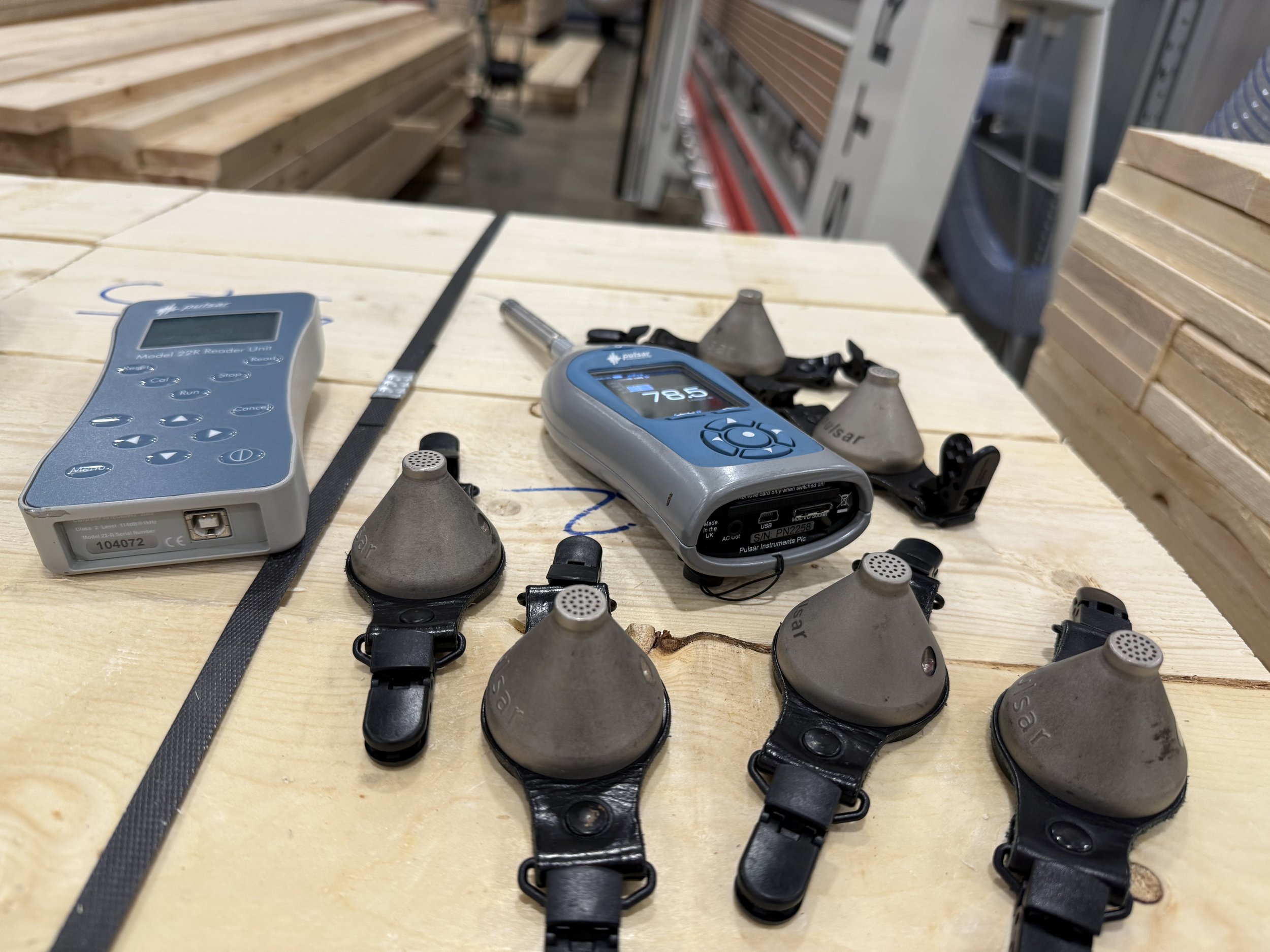
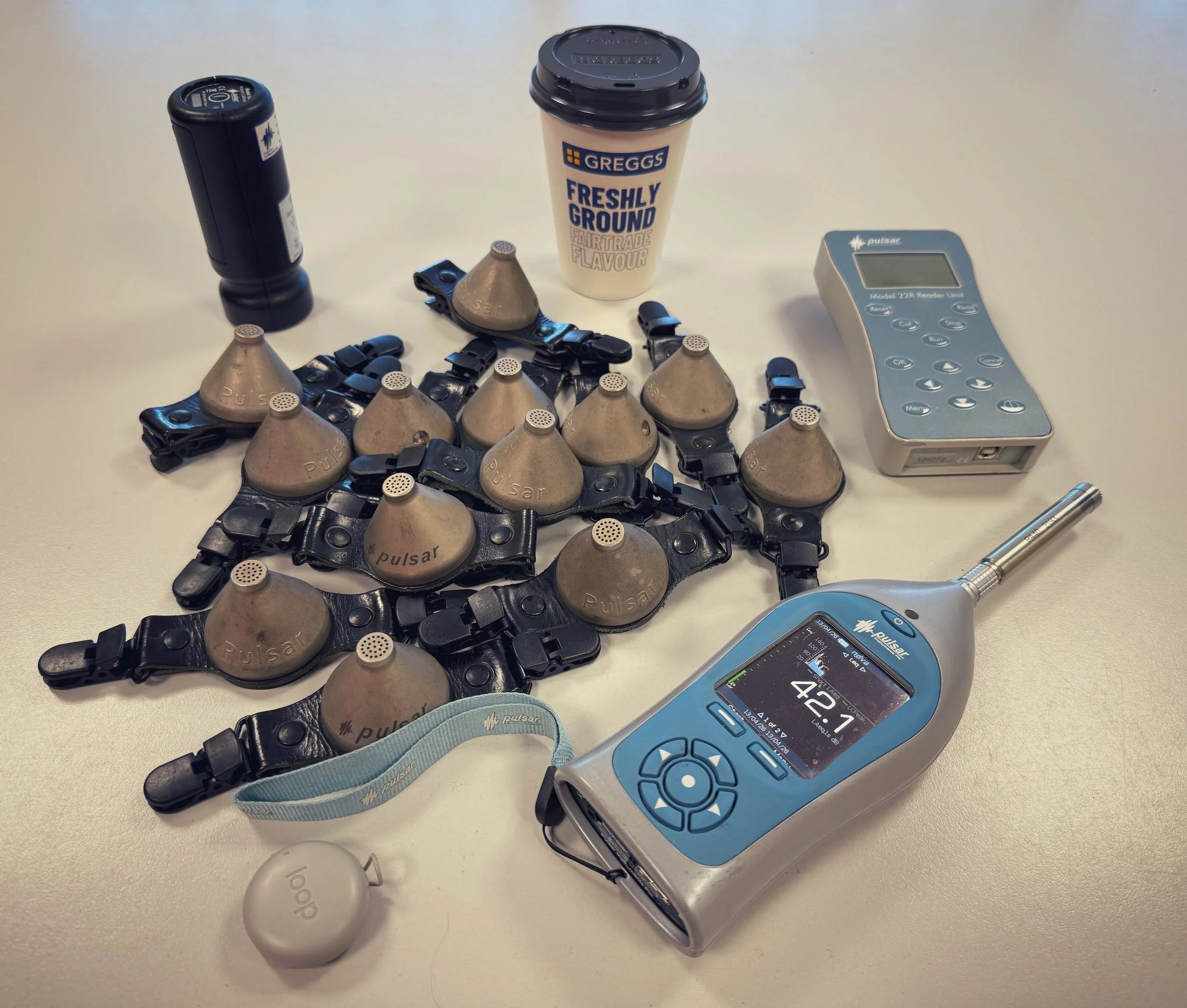
There are two basic types of noise meter, hand-held and wearable, (also called dosimeters or dosimeters). Wearables have a use but care is needed with them, especially if they are going to be used as the primary means of gathering data in a noise assessment.
A common question is how long a noise assessment will take on a site. It is influenced by a few things such as variation in work on the site, production cycles and number of people present. These are the factors influencing how long a noise assessment takes place on the day.
Employers must manage noise risks in their workplace, but what they need to do depends on how loud it is. This describes what is needed depending on the findings of a noise assessment.
The short answer is no, illuminated noise safety signs are not useful, and in many cases simply mislead. They have no part in a noise assessment. The article explains more about why this is the case.
One of the grey areas of noise safety is noise exposure while driving for work. By drivers I mean anyone driving as part of their job so the obvious ones like van or HGV drivers, but also driving around in a car or van - managers on site visits, sales reps, any person driving between sites or to customer sites, etc.
A common question which comes up on noise assessments is what classes a dangerous noise in an office environment, with people asking what the safe levels are for noise in offices. The issue is often more about distracting noise rather than dangerous noise.
A client recently asked me if pregnant women are OK to work in an environment with a noise level which is considered ‘high’, so over 85 dB(A), or whether the noise can cause risk to either the pregnancy or foetus. That was an interesting one so I looked into it further.
There is a temptation when told you need something as nebulous as a noise assessment to buy a cheap noise meter off somewhere like Amazon and crack on yourselves. It is of course possible to do a noise assessment yourself and these are the main point to watch out for and make sure you cover.
The Noise Regs focus on daily average noise risk levels for staff, but for some workplaces such as joinery workshops or small metal fabrication businesses, the daily variation in the work is such that an average noise exposure level on one day has no relevant to any others.
Website and blog articles written by Adam, The Noise Chap - an independent occupational noise assessor with over 30 years of experience, holding the IoA Certificate of Competence in Workplace Noise Assessment, the NEBOSH Diploma, certified in screening audiometry and a member of the British Society of Audiology.