
A workplace noise assessment should be undertaken by someone who is ‘competent’, but the Control of Noise at Work Regulations 2005 don’t actually define what competence is.
Key points: competence for workplace noise assessment
A workplace noise assessment needs to be undertaken by someone ‘competent’.
Neither the Control of Noise at Work Regulations 2005 nor L108 Controlling Noise at Work actually define what ‘competence’ is.
Competence is a combination of qualification and experience.
A good qualification but no experience is not ‘competent’, both are needed.
What the Noise Regs say about competence for a noise assessment
The Noise Regulations and the accompanying guidance in L108 are rather vague on what counts as competence for a noise assessment.
L108 Controlling Noise at Work, statement on competence for noise assessment
L108 Controlling Noise at Work, a noise assessment is sufficient if done by someone competent
Both these are saying that the noise assessment needs to be done by someone competent, but don’t actually say what ‘competent’ is.
What is competence for a noise assessment?
If you speak to them directly, the HSE say it is a balance of knowledge and experience and that makes sense. It is no good if someone is full of qualifications and knowledge but has no idea how to practically implement it when measuring noise, and no good if someone knows how to get a load of good noise data but has no idea what to do with it.
So employers looking to decide if someone is competent need to look at two things, qualification and experience. A common health and safety qualification is the NEBOSH route, of Certificate and then Diploma.
NEBOSH Certificate
If someone has this then I would not view it as competent to conduct noise assessments. I have this and it is enough knowledge to let you get into trouble.NEBOSH Diploma or a health and safety degree, but without experience
On its own without a lot of experience, then no, I would not view this as competent. It is a good qualification, I have one, but it goes a lot into the regulatory and management side of things and doesn’t have a lot on practically standing in a factory you have never seen before and doing a noise assessment.NEBOSH Diploma or a health and safety degree and with a lot of experience
Depending on the person, this could be classed as competent as the level of experience is key. Someone with a NEBOSH Diploma and a couple of noise assessments under their belt then that’s still a bit shallow, someone with the Diploma and a load of noise assessment experience then they could be very good.NEBOSH Diploma or degree plus Institute of Acoustics certification and experience
Yes, this is competent. They are trained to a good level in all things health and safety, have undergone what is a very rigorous course specifically in noise assessment, and have experience of implementing it.
What about other professional memberships or trade bodies?
There are a few of these around, for example membership of the Institute of Occupational Safety and Health (IOSH) or being on the HSE’s Occupational Safety and Health Consultant Register (OSHCR). They are both personal professional membership routes.
The problem is they are both health and safety professional memberships. Whether someone knows all about lifting equipment or asbestos or confined spaces etc. has no bearing on what they are like for noise assessments. To be a member of those bodies you need to have a decent level of knowledge in a wide range of health and safety subject areas, most of which are irrelevant to a noise assessment, and neither body requires a deep specialist knowledge of noise assessment itself.
As a personal example, I used to be a member of IOSH - I was CMIOSH for many years, and being CMIOSH I could have been on the OSHCR as well. But I only do workplace noise assessment, nothing else, while to maintain the membership you have to remain current on everything from explosive atmospheres to warehouse racking and manual handling, all of which is irrelevant. Conversely you can maintain memberships of IOSH and OSHCR without knowing all that much about noise assessment so membership of them is not a guarantee of a good depth of knowledge.
There are other trade bodies covering noise as well, but there are also potential issues there which mean they are not a guarantee of competence in workplace noise assessment:
They cover all acoustics but a knowledge of environmental or planning noise, for example, is irrelevant to workplace noise. Different laws, different assessment techniques. If you don’t work in those areas then you can’t be a member, even though they have nothing to do with workplace noise assessment.
The company may be a member of a professional body, but does the person they are actually sending to the site have the right depth of qualification and experience? From what I have seen over the years, no. I have seen people working for companies who are members of trade bodies coming to sites to act as consultants but they themselves still have wet ink on their certificates and verging on no actual experience in what they are doing. It is no good if the company has a professional membership but the person gathering and interpreting the data doesn’t know what they are doing, and I have seen exactly that in action.
Personally, I don’t think anyone should be offering any kind of consultancy in any area of health and safety, noise or otherwise, unless they have a good decade or more of experience working in it, in different working environments. Knowing the theory is important, but experience of actually implementing it takes time. But that’s just me..!
Summary of competence in workplace noise assessment
The HSE look at competence as a combination of qualification and experience, and of those two, experience counts for a huge amount.
If you are looking to choose someone to do a noise assessment at work, look for a NEBOSH Diploma, some kind of specialist certification in workplace noise assessment such as the one from the Institute of Acoustics, (IOSH do a similar noise-assessment specific one as well), and very importantly, some kind of statement on just how much experience they have in noise assessment. Those are the key elements.
FAQ: Competence in workplace noise assessment
What makes you yourself competent to do noise assessments?
I started in general health and safety just over 30 years ago now (as of November 2026). I first did the NEBOSH Certificate and then the NEBOSH Diploma. I did the two week Institute of Acoustics Certificate of Competence in Workplace Noise Assessment course.
More uniquely, I am also qualified in workplace hearing testing and a member of the British Society of Audiology.
That combination of qualifications means I understand the legal side of noise safety, I understand where it fits into wider health and safety, I am certified specifically in workplace noise assessment, and from the hearing testing side of it I have a very good level of understanding of the health impacts of noise at work. The health element at the end of the day is why we are doing it.
For experience, I worked in health and safety as an employee for companies covering engineering, the food industry and agriculture before going self employed. I have since conducted noise assessments for hundreds and hundreds of companies ranging from shipping to the NHS, foundries to joinery, heavy engineering to window and door manufacture, via stone masonry, aviation, explosive testing and everything between.
What else should I check before hiring someone to do a noise assessment?
As well as asking about competence, in terms of qualification and experience, ask about:
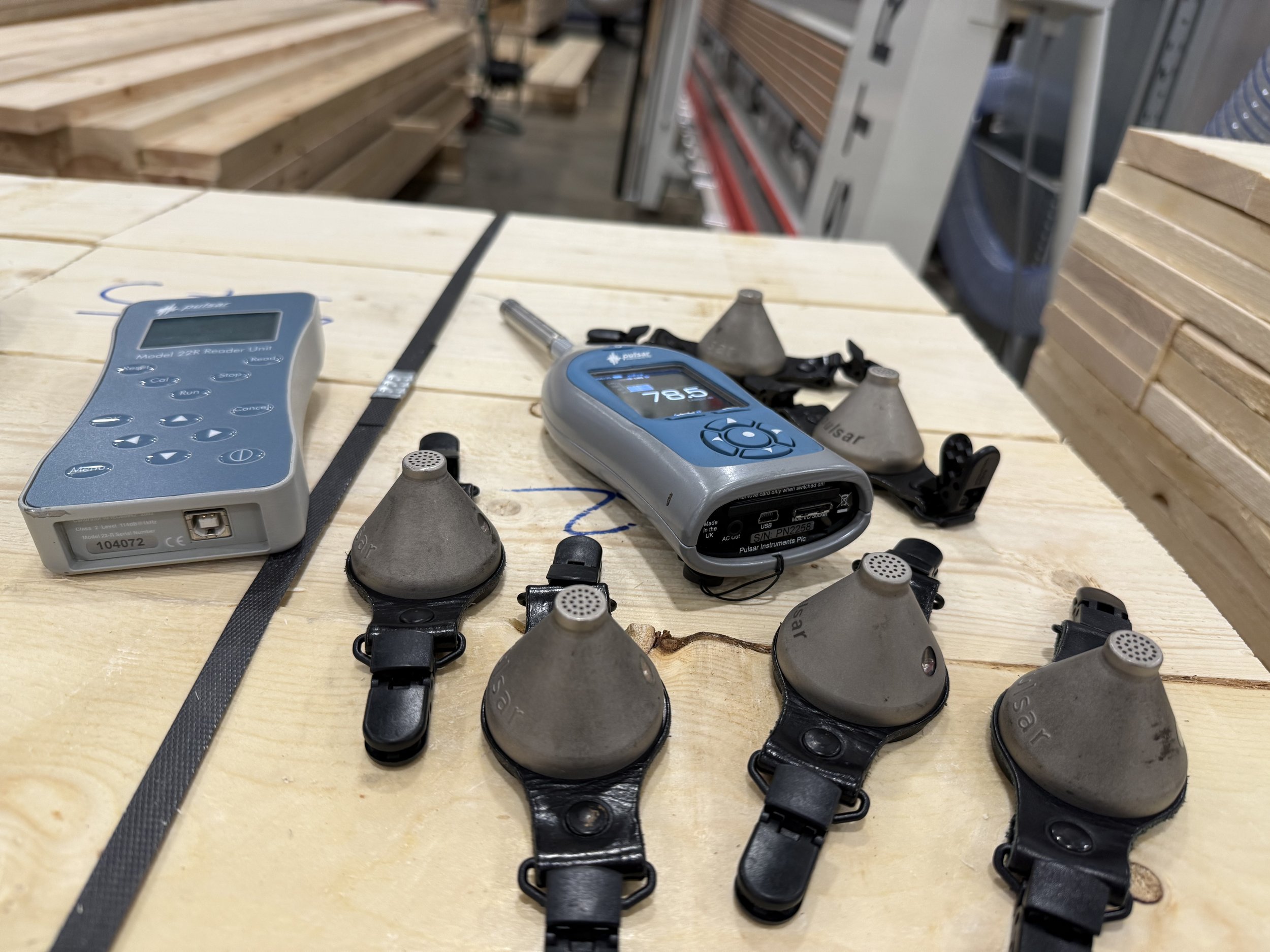
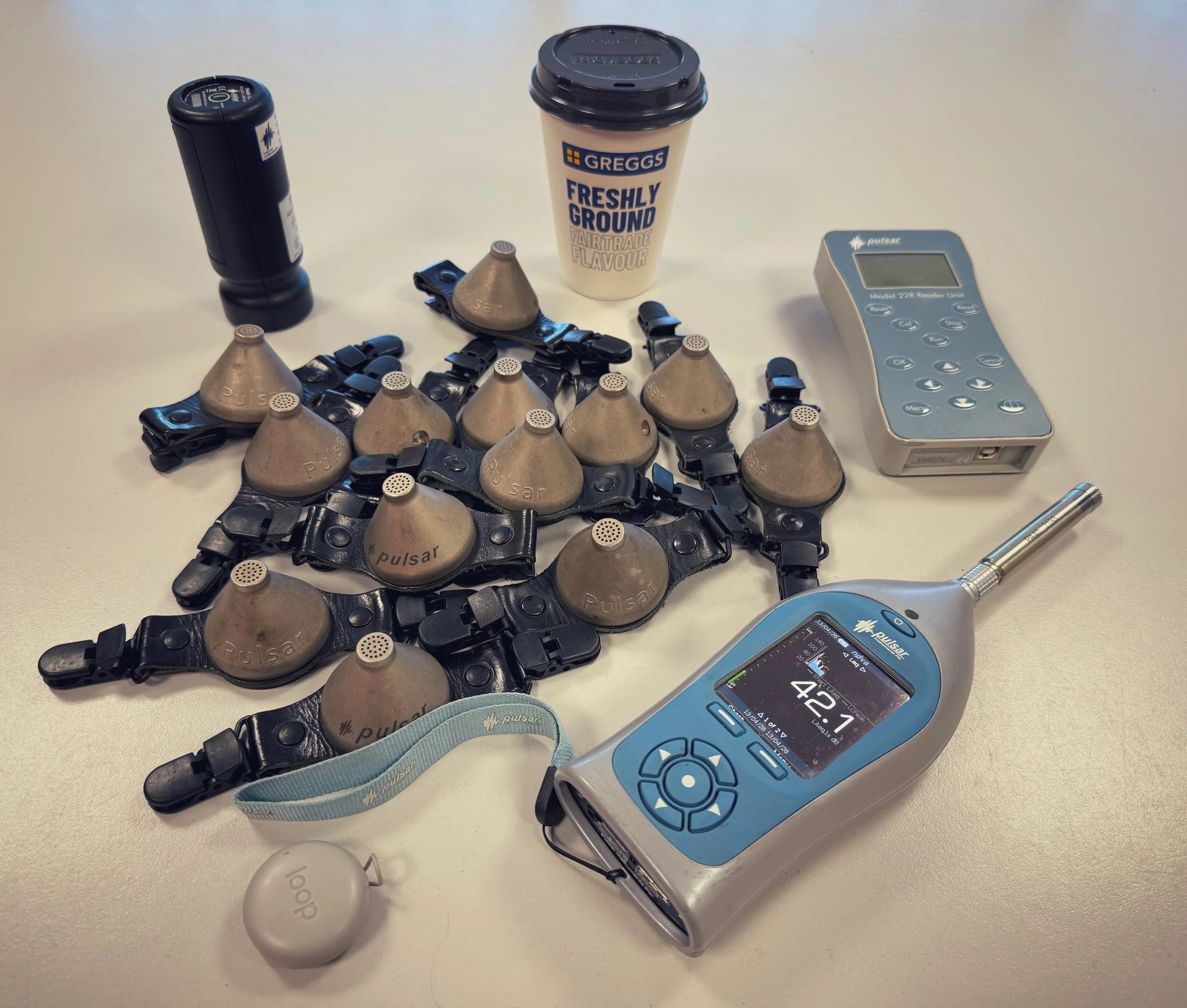
The type of noise meters are they using, (Class 1 or Class 2 is required).
In-date calibration and confirmation and on-site calibration check is done on the day.
Ask for a sample report to see what it is they are actually giving you.
Ask if they have done a noise assessment before in your type of industry to get an idea of what they know about your type of noise risk and working patterns.
More help and advice on workplace noise assessment





Article last updated: November 2026