
A common comment I hear from clients is that they’ve been recommended to fit longer nozzles to their air guns in order to reduce the noise exposures for the people using them, but is this actually true or more of an oft-repeated myth?
Key points: Air gun nozzle length and impact on a user’s noise risk
Air guns (air blow guns) are a commonly used tool in industry.
Noise levels are usually over 100 dB(A), and commonly up to around 105 dB(A), a significant noise risk.
I hear of companies being recommended to use longer nozzles as a means of reducing noise exposures.
I conducted a test to determine the impact of nozzle length using three air guns connected to the same air supply.
The test result showed that nozzle length has no impact on noise received by the user.
Air guns are a common noise source in industry, and are often the highest noise level on a site, especially in places such as CNC workshops.
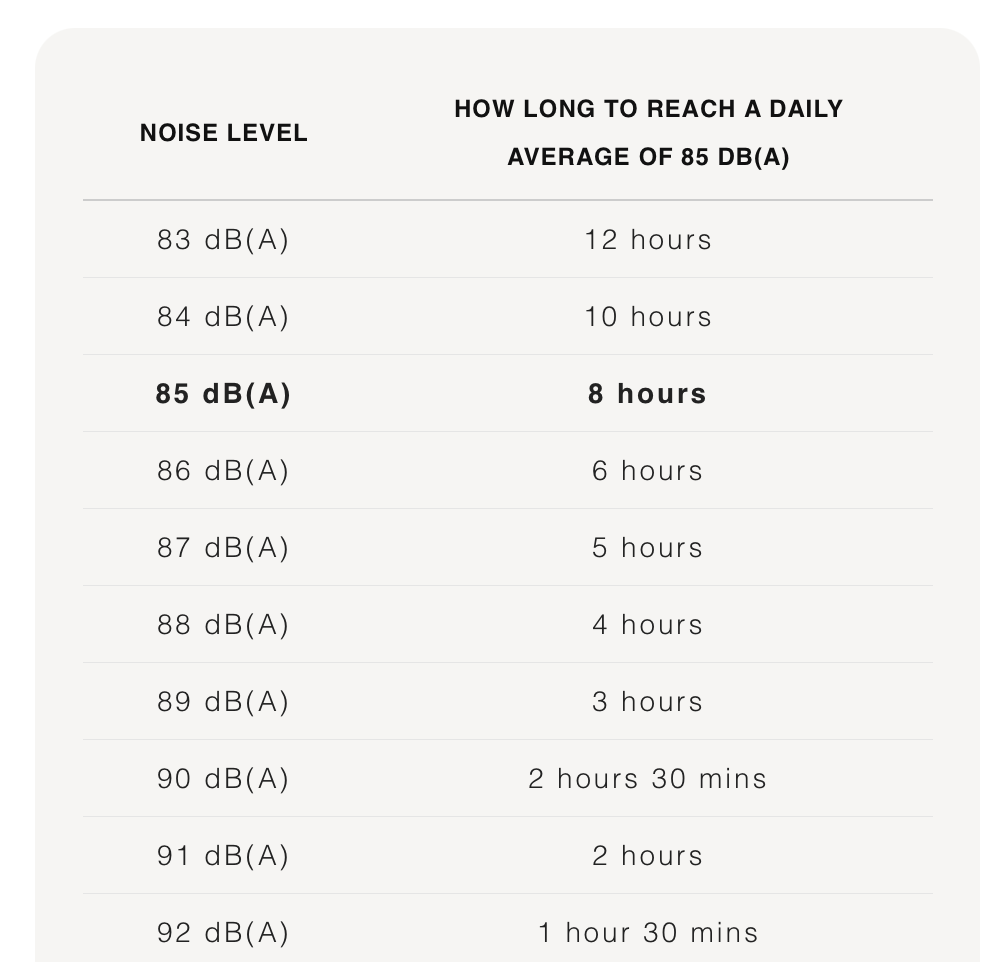
Air gun noise can be such that even with no other noise at all in a day, an air gun can cause someone to reach the daily average exposure limit of 85 dB(A) in only five minutes of use.
Employers are sometimes told that they should use longer nozzles with the theory being that it increases the distance between the air exiting the gun and the person using it.
My own experience of this is that the length of the air gun nozzle makes no difference to the noise level, so I undertook a test to see what the actual impact of nozzle length on air gun noise is.
A test of air gun nozzles
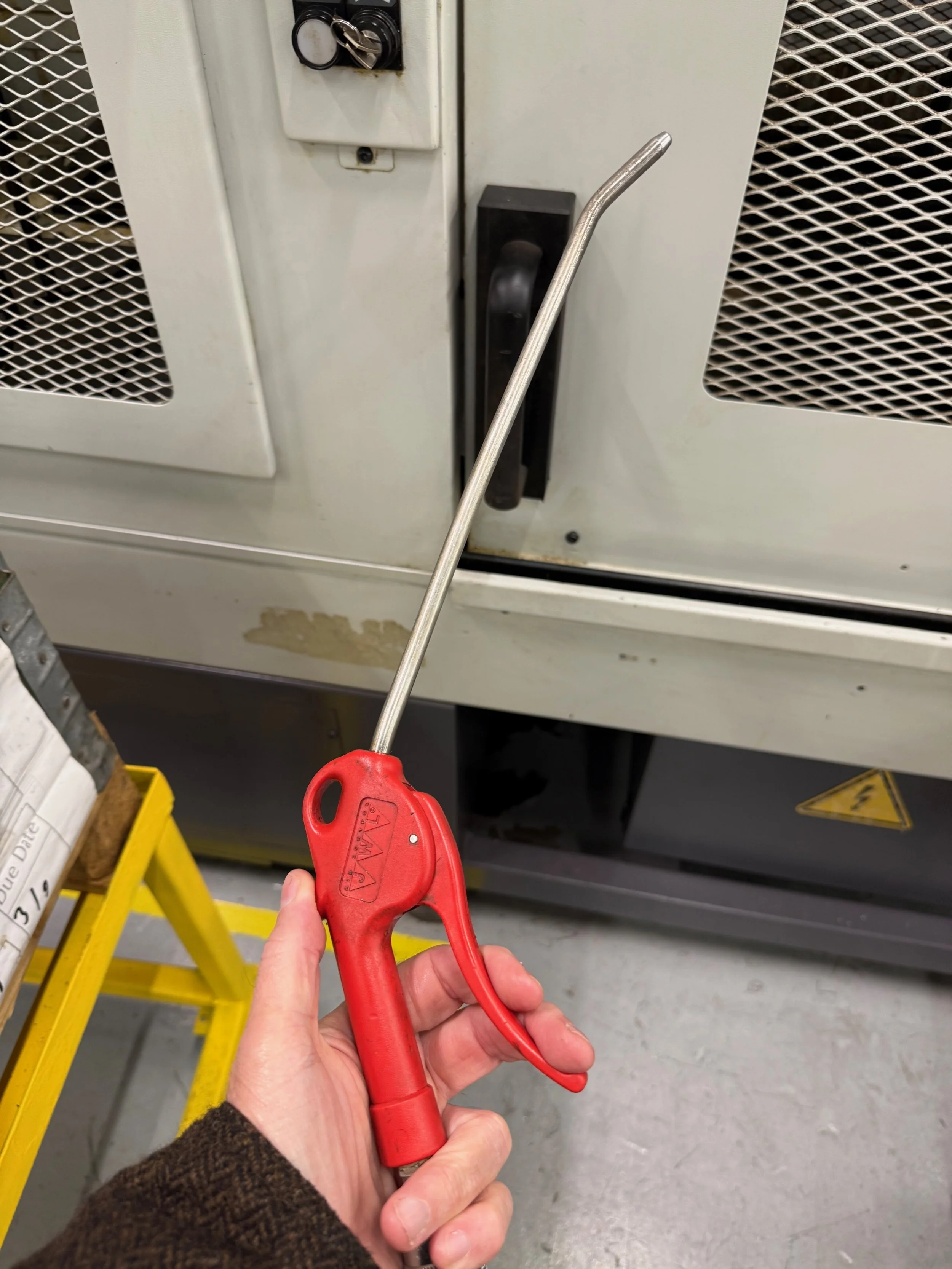
I conducted a test of three air guns with varying length nozzles. For the test:
All were connected to the same air supply - direct to the factory compressed air system rather than via a machine such as a CNC.
All have the same type of handle - handles can have an impact so this negates that.
All were in the same background noise. The test was conducted at a break time when all machines had stopped.
All had the same shaped end of the nozzle.
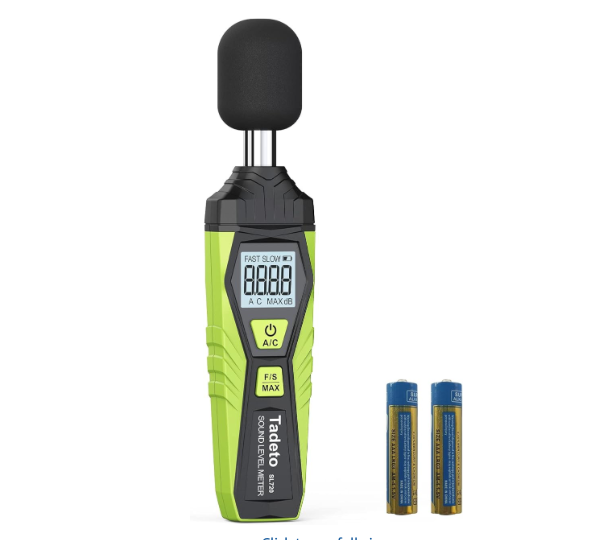
All were measured with the same noise meter, measured by the handle so the longer nozzles ended at an increased distance from the noise meter.
All were pointed at a plain flat surface to eliminate any change in noise caused by the shape of the material the air jet was hitting.
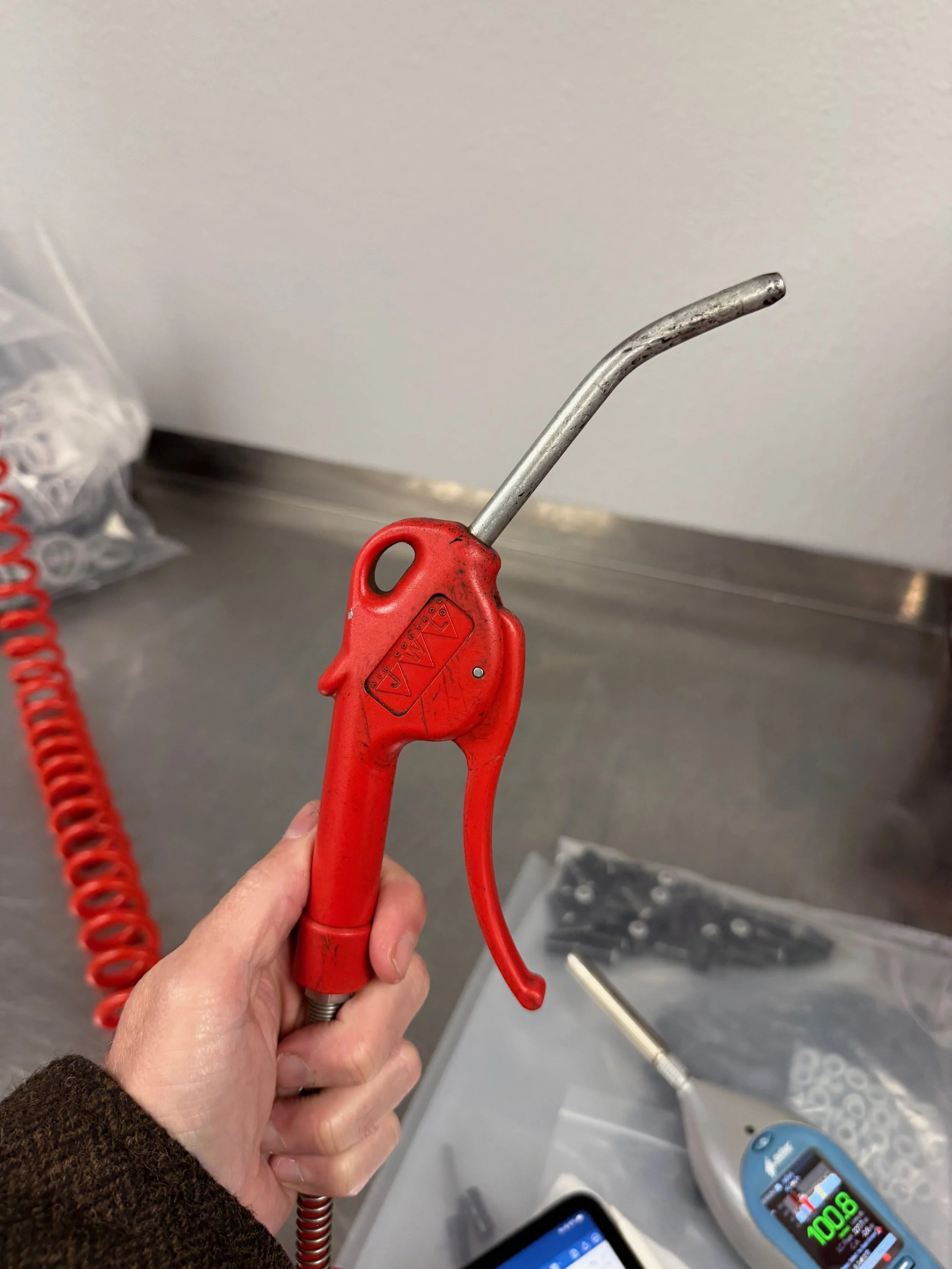
Airgun - short nozzle
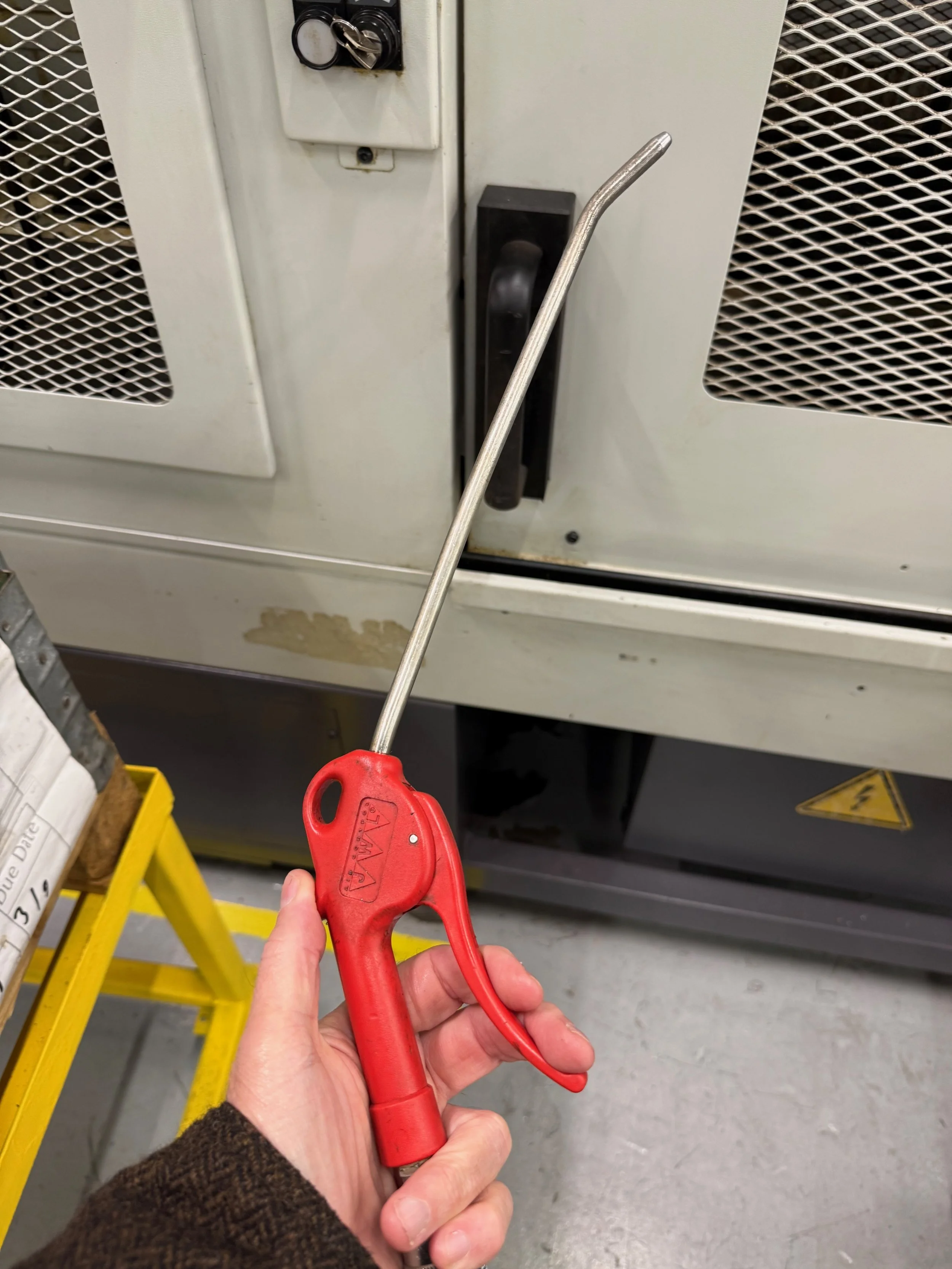
Airgun - medium nozzle
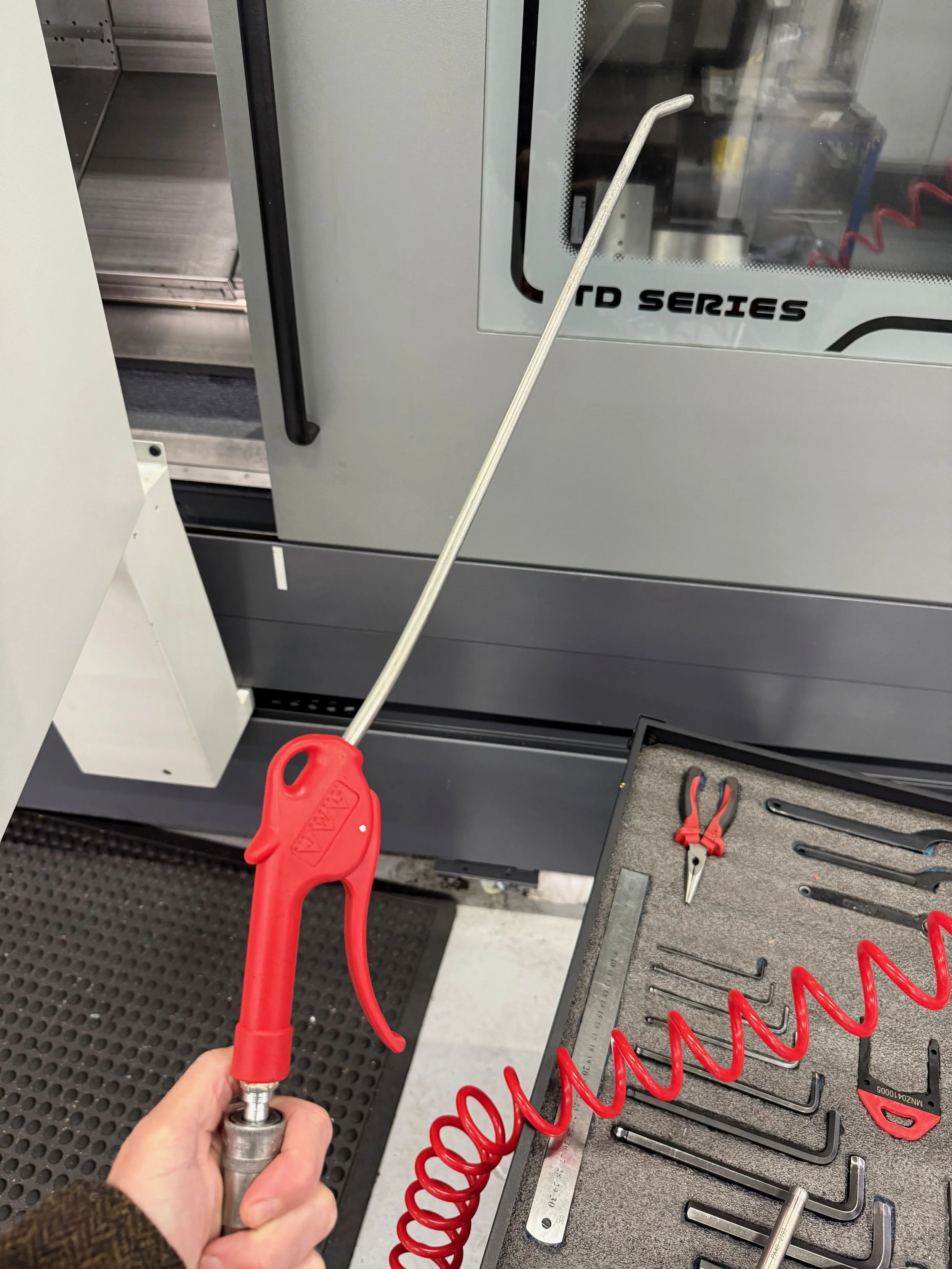
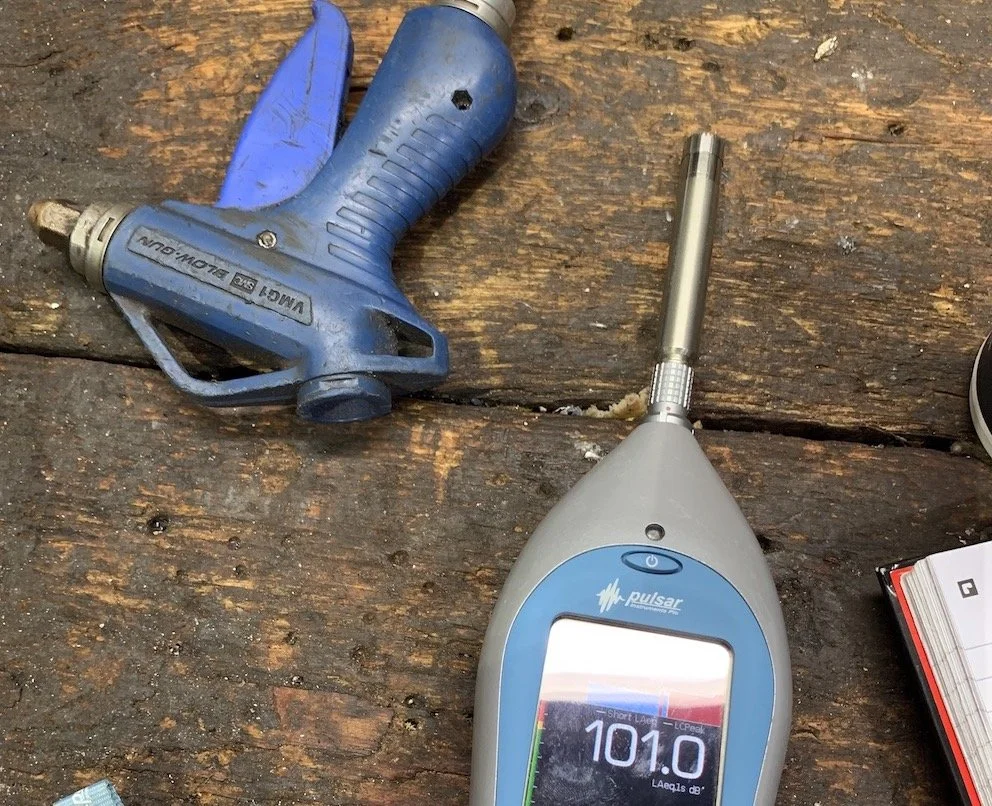
Airgun - long nozzle
The test results
Short nozzle: 100 dB(A)
Medium nozzle: 100 dB(A)
Long nozzle: 101 dB(A)
All were around the same noise level. The length of the nozzle has no material impact on the noise generated by the air gun.
Air gun nozzle length conclusion
The test confirmed that the length of a nozzle has no effect on reducing the noise exposure for personnel using them.
The increased distance between the user and the air exiting the air gun with a longer nozzle is so small it has no impact on the noise received by the user.
The only ways to reduce air gun noise
There are some ways to reduce or control air gun noise.
Low-noise handles - some are designed to reduce the noise level without reducing power.
Fitting silencers to the end of existing air gun nozzles.
Reducing the supply air pressure.
I have seen some places remove the air guns entirely and replace them with a vacuum hose connected to the machine’s own extraction.
More help and advice on noise safety at work











Article last updated: October 2026